What’s Making Holes in Your Clothes? Causes and Easy Ways I Prevent Them
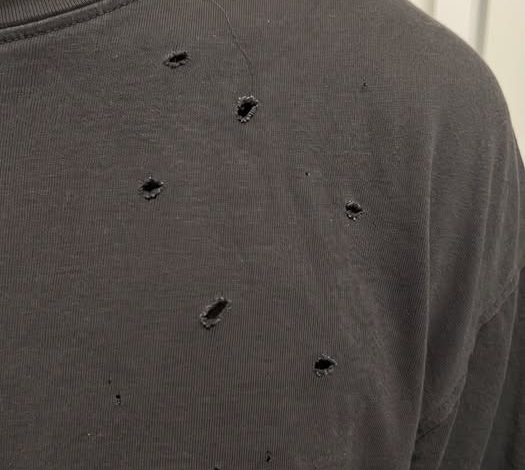
Have you ever reached into your closet for your favorite T-shirt, only to discover a tiny hole you could swear wasn’t there before?
And then you find another one.
Different shirt. Same mysterious little hole.
At that point, it’s tempting to blame the washing machine, the dryer, the laundry detergent—or maybe even some tiny creature living in your closet rent-free!
But before you start interrogating the entire laundry room, there’s something worth knowing: tiny holes in clothing can have several different causes, and the location of the damage can give you some surprisingly useful clues.
I’ve learned that the easiest way to solve the mystery is to stop looking at the hole itself and start looking at where it appears, what kind of fabric is affected, and what that clothing goes through every day.
And once you identify the culprit, preventing those holes can be much easier than you might expect.
If you’ve been wondering, “Why do my shirts keep getting tiny holes?”, let’s figure it out together!
If you enjoy practical household tips like this, subscribe by email so you don’t miss the next one.
Why Are Tiny Holes Appearing in My Clothes?
There isn’t one single explanation for damaged clothing.
Tiny holes can develop because of everyday friction, sharp surfaces, clothing hardware, laundry equipment, fabric wear, or—in some situations—insects.
Some of the most common possibilities include:
- Friction from countertops, desks, and furniture
- Belt buckles and pants buttons
- Zippers, hooks, and snaps
- Washing machine damage
- Dryer heat and tumbling
- Overloaded laundry loads
- Rough surfaces
- Delicate or weakened fabric
- Clothes moths
- Carpet beetle larvae
- Normal wear and tear
The good news is that the pattern of the holes can often help narrow things down.
Where the Hole Appears Matters
This is the first thing I look at whenever I find unexplained damage.
A hole in the lower front of a T-shirt tells a different story from several holes scattered across a wool sweater.
Tiny Holes Near the Bottom Front of Shirts
This is a particularly common mystery.
If your shirts keep developing tiny holes around the lower front, consider repeated friction.
Think about what that part of your shirt encounters during an ordinary day.
You might lean against:
- Kitchen counters
- Desks
- Tables
- Workbenches
- Bathroom counters
- Car interiors
- Chair edges
You may not even notice the fabric rubbing against the surface.
But if it happens hundreds of times, that repeated friction can gradually weaken the fibers.
Eventually, a tiny hole appears.
Holes Around Buttons or Zippers
If the damage is close to buttons, snaps, hooks, or zippers, clothing hardware deserves some attention.
A zipper with rough or damaged edges can catch fabric.
Buttons can rub against the surrounding material.
Hooks can snag neighboring garments in the laundry.
If the damage seems concentrated around these areas, inspect the garment before blaming your washer.
Holes Along Seams
A hole appearing directly along a seam may be related to normal wear, stressed stitching, or a seam that has started to weaken.
This isn’t quite the same as a random hole appearing in the middle of the fabric.
Look closely at whether the fabric itself has torn or whether the stitching is coming apart.
Multiple Holes in Stored Clothing
If you find several holes in clothing that has been sitting in a closet or storage container, especially wool or other animal-fiber garments, fabric pests become more worth investigating.
That doesn’t automatically mean moths.
But it does give you another clue.
Could Your Washing Machine Be Making Holes?
Yes, it can happen.
Washing machines contain moving parts, and a damaged or rough area can potentially snag clothing.
If you’re suddenly finding holes in multiple garments after washing, inspect the inside of the washer.
Look for:
- Rough or damaged surfaces
- Sharp edges
- Loose components
- Damaged agitators
- Objects trapped inside
- Areas where fabric could become caught
One simple check is to carefully run a nylon stocking or another delicate piece of fabric over accessible areas of the drum when the machine is off and completely safe to inspect.
If the material catches on something, you’ve found a possible problem.
For anything that requires opening the appliance or working around electrical components, it’s safer to have the machine inspected or repaired professionally.
Don’t Blame the Washer Too Quickly
There’s another important clue.
If the holes are always appearing in approximately the same place on your shirts, your washing machine may not be the problem at all.
A washing machine doesn’t generally target one specific spot on every shirt.
Repeated damage in the same location often points toward something happening while you’re wearing the clothes.
And that’s where friction becomes especially interesting.
Your Clothes May Be Rubbing Against Something Every Day
This is probably one of the most overlooked causes of tiny holes.
Think about everything you do while wearing a shirt.
You bend over.
You sit down.
You lean against a counter.
You reach across a desk.
You carry a bag.
You buckle your seat belt.
You cook dinner.
You wash dishes.
All of those movements create friction.
And if the same part of your shirt repeatedly rubs against the same surface, the fibers can gradually become weaker.
Eventually, they break.
The Kitchen Counter May Be the Culprit
This one is easy to overlook.
If you frequently lean against the kitchen counter while cooking or washing dishes, pay attention to where your shirt touches the counter.
A slightly rough edge can repeatedly rub against the fabric.
You might not feel anything happening.
Your shirt does.
If several of your shirts have holes in almost exactly the same location, take a look at the surfaces you regularly lean against.
You might solve the mystery in about thirty seconds.
Belts and Pants Buttons Can Cause Problems Too
Another possible source of friction is right around your waist.
A belt buckle, pants button, waistband, or other hardware can repeatedly press and rub against the lower front of your shirt.
If you notice holes appearing just above the waistband, compare the position of the damage with the hardware you’re wearing.
That pattern can be very revealing.
Zippers Can Be Tiny Fabric Destroyers
Zippers are incredibly useful.
They’re also very good at catching things they shouldn’t.
A rough zipper tooth, damaged slider, or improperly positioned zipper can snag delicate fabrics.
Before washing clothing with zippers, zip them closed.
It takes a few seconds and can help prevent the zipper from grabbing other garments during the wash.
For particularly delicate clothing, a mesh laundry bag provides another layer of protection.
Don’t Overload Your Washing Machine
I know how tempting it is.
There’s one last towel.
One pair of jeans.
A sweatshirt.
Maybe two shirts.
Surely the washing machine can handle it.
So you push everything in and somehow get the door closed.
We’ve all been there!
But an overloaded washer can restrict movement and increase rubbing between garments.
It can also make it harder for water and detergent to move properly through the load.
Follow your washing machine manufacturer’s recommendations for load size rather than treating the drum like a laundry storage bin.
What About the Dryer?
The dryer can contribute to clothing wear too.
Heat, tumbling, and repeated friction can gradually weaken fabrics, especially delicate garments.
If a shirt is already thin or worn, aggressive drying can make the problem worse.
A Simple Dryer Habit That Helps
Check the care label.
Not every garment should be dried using the highest heat setting.
For delicate items, consider:
- Lower heat
- Gentle cycles
- Shorter drying times
- Air drying
If you have a garment you really want to keep looking good, treating it gently is usually worth the extra effort.
Could Moths Be Eating Your Clothes?
Sometimes, yes.
Clothes moth larvae can damage certain natural animal fibers, including wool and other keratin-containing materials.
The larvae—not the adult moths flying around your home—are responsible for the fabric damage.
This is one reason you shouldn’t automatically assume every hole in a shirt came from the laundry.
Signs That May Point Toward Fabric Pests
Pay closer attention if you notice:
- Damage to wool or other animal-fiber clothing
- Several garments affected
- Damage in dark or quiet storage areas
- Webbing or cases
- Larvae
- Similar damage in rugs or other textiles
If you suspect an infestation, inspect the closet and nearby textiles rather than looking at only one damaged garment.
Carpet Beetles Can Damage Fabric Too
Moths aren’t the only insects worth considering.
Carpet beetle larvae can also damage certain natural fibers.
If you discover unexplained damage in stored clothing, rugs, upholstery, or other textiles, inspect the surrounding area for signs of insect activity.
The important thing is not to assume that every clothing hole has the same cause.
How I Prevent Tiny Holes in My Clothes
Once you’ve lost enough favorite shirts to mysterious little holes, you start paying attention!
Here are some simple habits that can help reduce unnecessary clothing damage.
1. Turn Clothes Inside Out
Turning shirts inside out before washing can help reduce surface wear and protect prints, colors, and finishes.
It’s particularly useful for clothing you want to keep looking newer for longer.
2. Zip Up Zippers
Before clothes go into the washer, close zippers.
That little habit can prevent zipper teeth from catching other garments.
3. Use Mesh Laundry Bags
Mesh bags are especially helpful for:
- Delicate shirts
- Bras
- Underwear
- Lightweight fabrics
- Small garments
- Easily snagged items
They’re one of those inexpensive laundry accessories that can become surprisingly useful.
4. Separate Heavy and Delicate Items
Try not to wash delicate shirts in the same load as heavy towels, rough jeans, and bulky sweatshirts.
Heavy items can create more friction during washing.
Give delicate clothes a gentler environment whenever possible.
5. Don’t Stuff the Washer
Leave enough room for clothes to move freely.
Your washing machine isn’t more effective just because you managed to squeeze another shirt into the load.
6. Check Your Washer Occasionally
Take a quick look inside the drum every so often.
If something looks rough, damaged, loose, or unusual, investigate before washing another load of delicate clothing.
7. Use Appropriate Dryer Settings
Check the care label and avoid unnecessary high heat.
For delicate garments, air drying can be an excellent option.
8. Watch Where Your Shirts Rub
This one may sound silly.
It isn’t.
If every hole appears around your waist or lower front, look at your daily routine.
Where do you lean?
What does your shirt rub against?
What kind of belt or pants hardware are you wearing?
You may discover that the mystery isn’t happening in the laundry room at all.
How to Prevent Moth and Insect Damage
If you’re concerned about clothing pests, prevention starts with good storage habits.
Keep Closets Clean
Vacuum closet floors, corners, shelves, and other areas where lint, hair, and debris collect.
Don’t forget those dark corners you rarely think about.
Wash Clothing Before Long-Term Storage
Before storing clothing for a long period, make sure it’s clean and completely dry.
This is especially important for seasonal garments that may spend months untouched.
Store Vulnerable Fabrics Carefully
Wool, cashmere, and similar natural fibers deserve extra attention.
Sealed storage containers can help protect them from pests while they’re not being worn.
Check Clothes Regularly
Don’t wait until winter to pull out a sweater and discover several holes.
Occasionally inspect stored clothing so you can catch problems early.
Can Detergent or Fabric Softener Cause Holes?
They’re usually not the first suspects I’d investigate.
Repeated washing itself can contribute to general fabric wear, and some fabrics are more delicate than others.
If you’re seeing sudden, unexplained holes, start with the more obvious possibilities:
- Friction
- Sharp surfaces
- Zippers
- Hooks
- Washer problems
- Dryer heat
- Fabric pests
- Existing fabric weakness
Once those possibilities have been ruled out, you can look more closely at changes in your laundry products and routine.
How to Repair a Tiny Hole in Clothing
Don’t throw away a perfectly good shirt just because it has one tiny hole.
Small holes can sometimes be repaired with careful hand stitching or an appropriate fabric-repair technique.
If the garment is expensive, delicate, or sentimental, a tailor may be the better choice.
And don’t wait too long.
A tiny hole can become a much larger tear once the surrounding fibers continue to weaken.
When Is It Time to Replace the Garment?
Sometimes the fabric is simply worn out.
If you notice:
- Several holes
- Multiple thinning areas
- Extensive fraying
- Weak seams
- Fabric becoming extremely thin
- Repeated tears in different locations
then repairing one hole may only provide a temporary solution.
Clothing doesn’t last forever.
Frequent washing, drying, sunlight, friction, and ordinary wear gradually take their toll.
Frequently Asked Questions
Why do my shirts keep getting tiny holes?
Tiny holes can result from repeated friction, sharp surfaces, zippers, buttons, laundry equipment, dryer wear, insects, or fabric that has become weak from repeated use.
Why are the holes mostly near the bottom of my shirts?
Holes in the lower front can be caused by repeated rubbing against countertops, desks, belt buckles, pants buttons, or other surfaces. If several shirts have holes in the same area, look for a common source of friction.
Can a washing machine really put holes in clothes?
Yes. A damaged or rough component can potentially snag fabric. Overloading the washer can also increase friction between garments.
Can the dryer make holes in clothes?
Drying can contribute to fabric wear through heat, tumbling, and friction. This is particularly important for delicate or already weakened fabrics.
How can I stop my clothes from getting holes in the wash?
Try turning clothes inside out, closing zippers, using mesh laundry bags, separating delicate garments from heavy items, avoiding overloaded loads, and checking the washer for rough or damaged areas.
Are moths always responsible for holes in clothes?
No. Moths are only one possible cause. Friction, clothing hardware, appliance problems, fabric weakness, and ordinary wear can also create holes.
What fabrics are most vulnerable to clothes moths?
Natural animal fibers such as wool and cashmere can be particularly vulnerable to damage from clothes moth larvae.
Should I wash clothes before putting them into storage?
Yes. Clean and completely dry clothing is generally preferable for long-term storage. Proper storage can also make it easier to inspect garments and protect them from pests.
A Simple Checklist for Solving Clothing Holes
The next time you discover a mysterious hole, don’t panic.
Think like a detective!
Look at the Location
Is it near the waistband?
Near the bottom front?
Around a zipper?
Along a seam?
The location can provide your first clue.
Check Other Clothes
Are several garments affected?
Do they all have holes in the same area?
A pattern is important.
Think About Fabric
Is it a lightweight T-shirt?
A wool sweater?
A delicate blouse?
Different fabrics have different vulnerabilities.
Examine Your Laundry Routine
Have you recently changed:
- Washer settings?
- Dryer settings?
- Laundry products?
- Load sizes?
- The way you sort clothes?
Even a small change can be worth investigating.
Check Your Closet
If stored clothing is being damaged, inspect nearby garments, rugs, and storage areas for signs of fabric pests.
A little detective work can save an entire wardrobe.
Final Thoughts
There’s something incredibly frustrating about finding a tiny hole in a shirt you actually like.
Especially when you have no idea where it came from.
But those little holes usually aren’t as mysterious as they seem.
Look at where the hole is, what the garment is made from, how often you wear it, how you wash it, and what it rubs against.
You may discover that your kitchen counter is the real culprit.
Or a zipper.
Or an overloaded washer.
Or perhaps a dryer setting that’s a little too aggressive for your favorite clothes.
And if the damage is happening to stored wool or other susceptible fabrics, don’t forget about fabric pests.
The best part is that many of these problems are preventable.
A mesh laundry bag here.
A closed zipper there.
A little less friction.
A gentler drying setting.
A quick inspection of the washing machine.
Those small habits can make a surprisingly big difference.
And honestly, I’d much rather spend a few minutes preventing tiny holes than standing in front of my closet wondering why another perfectly good shirt has mysteriously developed one!
More Practical Home Tips to Try
If you enjoy simple household tricks and everyday solutions, you might also enjoy:
- How to Make Your Clothes Last Longer
- Simple Ways to Keep Towels Soft and Fresh
- Why Clothes Sometimes Smell Musty After Washing
- Easy Ways to Remove Stubborn Laundry Odors
- Laundry Mistakes That Can Wear Out Your Clothes Faster
Did You Figure Out What’s Making the Holes?
I’d love to hear what you discovered!
Was it a rough countertop? A zipper? Your washing machine? Or something hiding in the closet?
Leave a comment with your experience and share your photos or tips on Pinterest so other readers can compare notes and solve their own clothing-hole mysteries.
Because sometimes the smallest household problems just need a little detective work.