Maine Property Offers 60 Wooded Acres, Hunting Trails and a Cabin Project
60 Acres in Maine With an Unfinished Cabin and Existing Well Listed for $125,000
Finding 60 acres of rural land in Maine for $125,000, especially with road access, existing structures, and reported utility improvements, may attract buyers looking for recreational acreage or a future rural retreat.
Located at 602 New Dunntown Road, Wade, ME 04786, this property combines approximately 60 acres of mixed woodland, open clearings, established trails, an unfinished cabin project, and several additional structures.
The listing also reports a private well, a private sewer system, and a concrete pad. For someone interested in developing a rural property over time, these features may offer a starting point.
However, this is not a move-in-ready home. The supplied photographs show an older building with extensive roof deterioration, while the smaller cabin appears to remain unfinished. The listing reports zero finished square feet, and the condition and functionality of the existing infrastructure have not been independently established.
The main question is whether the land, improvements, and potential development costs make sense for a buyer’s plans.
Property Overview
| Feature | Listing details |
|---|---|
| Address | 602 New Dunntown Road, Wade, ME 04786 |
| Asking price | $125,000 |
| Land size | Approximately 60 acres |
| Property type | Single-family residential listing |
| Year built | 2020, according to listing data |
| Finished living area | 0 sq. ft. reported |
| Bedrooms | Not specified |
| Bathrooms | Not specified |
| Terrain | Wooded, rural, rolling slopes |
| Road surface | Paved |
| Water | Private well listed |
| Sewer | Private sewer listed |
| Heating | Wood stove listed |
| Cooling | None listed |
| Annual property taxes | Approximately $1,533 |
| Listing date | October 2, 2026 |
| Zoning | Residential, according to listing |
These details are based on the supplied listing information and should be independently verified.
What Makes These 60 Acres Interesting?
The strongest feature of this property is the land itself.
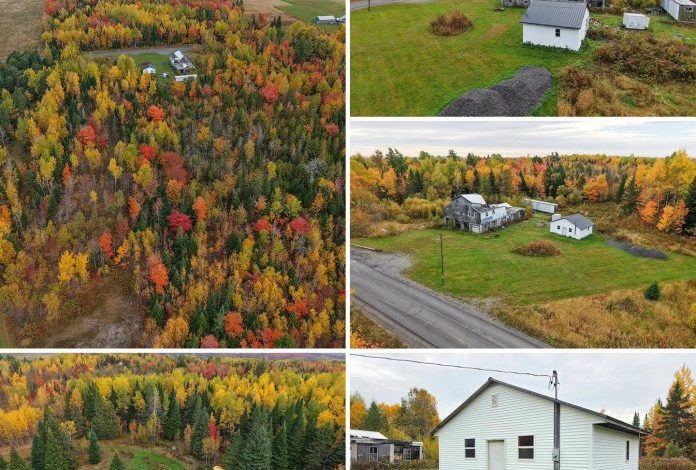
Aerial photographs show a broad landscape of mixed woodland, including evergreen trees and deciduous forest. The property also appears to include open areas and paths running through the trees.
Unlike an entirely undeveloped wooded parcel, this property reportedly has established interior roads or trails. These could make it easier to explore different sections of the acreage, reach recreational areas, and evaluate possible future building locations.
However, buyers should not assume that every trail is suitable for regular vehicle use. Trail width, drainage, grades, soil conditions, and maintenance requirements all matter.
The rolling terrain is another important consideration. The supplied topographic map indicates changes in elevation across the parcel. While those slopes may create attractive wooded settings, they can also affect construction costs, driveway placement, drainage, and the amount of land that can be developed economically.
A land survey and an on-site evaluation are essential for understanding how much of the acreage is practically usable.
An Unfinished Cabin Project
The listing describes a structural cabin shell that may be ready for interior finishing.
Photographs of the smaller building show an enclosed structure with exterior siding, a metal roof, windows, and a door. Inside, the space appears to remain under construction, with exposed framing, unfinished walls, building materials, and equipment.
The listing identifies a first-floor great room measuring approximately 20 by 28 feet, or 560 square feet.
That measurement provides a useful starting point for understanding the building’s potential interior space, but it should not be confused with finished or approved residential living area.
In fact, the listing reports zero finished square feet and does not identify completed bedrooms or bathrooms.
A buyer considering this structure as a future cabin should investigate several questions:
- Was the building constructed under the required permits?
- Have the foundation, framing, electrical work, and roof been inspected?
- Are the installed materials suitable for northern Maine’s climate?
- What plumbing, insulation, heating, and interior work remains?
- Can the structure legally receive a certificate of occupancy after completion?
The presence of building materials does not establish that construction was completed correctly or that those materials are included in the sale.
For someone with construction experience, the shell may offer a useful starting point. For a buyer expecting a finished weekend cabin, however, the remaining work could be substantial.
The Older Building Is a Major Concern
One of the most important details in the photographs is the condition of the large older structure.
Several images show extensive missing roof sections, exposed framing, weathered exterior surfaces, and signs of prolonged deterioration.
This is not damage that should be dismissed as cosmetic.
When a building has significant roof exposure, rain and snow can affect framing, floors, wall cavities, insulation, and foundations. The damage may extend well beyond what is visible in photographs.
Before assigning any value to this structure, buyers should obtain a professional assessment of its structural condition.
Possible outcomes could include major reconstruction, partial demolition, or complete removal. Each option carries different costs.
Demolition may also involve permits, disposal fees, and additional precautions if older materials contain asbestos, lead-based paint, or other regulated substances.
The listing mentions an old shingle mill structure that could potentially be cleared or repurposed. However, the photographs alone do not establish which building corresponds to that description or whether any structure is safe to reuse.
A buyer should identify each building, confirm its ownership and permitted use, and obtain written estimates before deciding what to do with it.
Hunting, Trails and Outdoor Recreation
For buyers interested in outdoor recreation, the listing highlights several features.
The property reportedly includes established hunting blinds and interior trails. Its wooded acreage may offer space for wildlife observation, hiking, and seasonal outdoor activities.
The listing also states that the rear of the property is close to an established snowmobile trail. This could be attractive to buyers who enjoy Maine’s winter recreation opportunities.
However, proximity to a trail is not the same as legal access. Buyers should confirm its exact location, permitted use, seasonal operation, and whether any connecting route crosses neighboring land.
Hunting opportunities also depend on state regulations, hunting seasons, safety setbacks, neighboring properties, and actual wildlife conditions on the parcel.
The acreage creates possibilities, but none of these recreational uses should be assumed without verification.
Water, Sewer and Electricity: What Is Actually Available?
The listing identifies a private well and private sewer system. It also mentions an additional well and a concrete pad.
These details could be valuable because installing rural utilities from scratch can be expensive. However, existing infrastructure only adds meaningful value when its location, condition, legal status, and functionality are established.
Water: Buyers should determine how many wells exist, which buildings they serve, whether they produce adequate water, and whether the water meets appropriate quality standards.
Sewer: The listing references private sewer service but does not provide enough information to confirm the system’s type, location, capacity, or condition. Buyers should request available septic records and arrange an inspection.
Electricity: Circuit breakers are listed among the electrical features, and utility equipment is visible in photographs. Neither detail confirms that electrical service is currently active, code-compliant, or connected to every structure.
Heating: A wood stove is listed, but its condition and safe operation need to be checked. No cooling system is reported.
Before budgeting for a rural retreat or full-time residence, buyers should obtain utility information directly from relevant service providers, inspectors, and local authorities.
For additional information, the U.S. Environmental Protection Agency’s septic system guidance explains basic system maintenance and ownership considerations.
What Does $125,000 Mean for 60 Acres?
At the advertised asking price, the simple calculation is:
$125,000 ÷ 60 acres = approximately $2,083 per acre.
That figure is useful as a quick reference, but it is not a direct comparison with vacant land prices.
The sale includes existing structures and reportedly some infrastructure. Depending on their condition, those improvements could have positive value, negative value, or both.
For example, a functional well could reduce future development expenses. A severely damaged building requiring demolition could add significant costs.
The listing also reports annual property taxes of approximately $1,533.
Taxes may change following a sale, reassessment, changes in use, or improvements to the property. Buyers should confirm the current assessment with the appropriate local office rather than assuming the existing bill will remain unchanged.
The actual ownership budget should account for more than the purchase price. Potential expenses include property insurance, construction permits, site work, tree removal, utility repairs, driveway maintenance, snow removal, professional inspections, and the cost of finishing or removing buildings.
Could This Become an Off-Grid Homestead?
The acreage, woodland, and unfinished cabin project make the property worth investigating for someone interested in a rural homestead.
A buyer might envision a small seasonal retreat, a private recreational base, or a future year-round residence.
But those plans require separate feasibility checks.
A homestead needs reliable water, approved wastewater disposal, safe shelter, adequate heating, and practical year-round access. In northern Maine, winter conditions make insulation, heating, snow management, and road access especially important.
The wooded acreage may also require selective clearing to establish gardens, solar installations, or additional structures.
Before purchasing, buyers should confirm whether local zoning and land-use requirements allow their intended improvements. Residential zoning does not automatically authorize every proposed use.
Important Risks Buyers Should Investigate
This property has several potential advantages, but it also has meaningful uncertainties.
Potential advantages
- Approximately 60 acres of mixed woodland.
- Established trails and open areas.
- Reported hunting blinds and nearby snowmobile recreation.
- An enclosed cabin shell that may provide a starting point for a building project.
- A private well and other reported infrastructure.
- Paved road frontage, according to the listing.
Important drawbacks
- No finished residential living area is reported.
- The cabin interior remains unfinished.
- The older structure has extensive visible roof deterioration.
- Water, septic, and electrical systems have not been independently verified.
- Sloped and wooded land may increase development expenses.
- Year-round access, snow removal, and maintenance obligations need confirmation.
- Financing and insurance may be difficult if the improvements are incomplete or unsafe.
A particularly important step is obtaining a professional assessment of both the unfinished cabin and the deteriorated building.
Without that information, a buyer cannot reliably estimate the property’s total development cost.
Buyer Due-Diligence Checklist
Before making an offer, prospective buyers should:
- Order a boundary survey: Confirm the full 60 acres, road frontage, easements, and locations of all structures.
- Verify legal access: Determine whether the parcel has direct, lawful access from the paved road and whether additional access rights are needed.
- Inspect every building: Obtain professional evaluations of foundations, framing, roofs, electrical systems, and any existing plumbing.
- Check permits and zoning: Confirm the status of the cabin shell and what work is required for lawful occupancy.
- Test the water supply: Verify well yield, water quality, and the condition of pumps and associated equipment.
- Investigate wastewater systems: Request available septic permits and arrange an inspection.
- Review environmental conditions: Check flood exposure, drainage, wetlands, and possible contamination around older structures.
- Estimate construction and demolition costs: Obtain written contractor estimates, including debris removal.
- Confirm financing and insurance: Ask lenders and insurers whether they will accept the property’s current condition.
- Verify listing details: Confirm the current price, whether equipment and building materials convey, and any seller disclosures.
For land and flood research, buyers can consult the FEMA Flood Map Service Center and the USDA Web Soil Survey.
Who Might Be Interested in This Property?
This property may appeal most to buyers who value acreage and outdoor space more than immediate residential comfort.
A contractor or experienced renovator might be interested in assessing whether the cabin shell can be completed economically.
A recreational land buyer may focus primarily on the woods, trails, and hunting opportunities.
Someone seeking a remote homestead might consider the property if utility inspections and local regulations support their plans.
By contrast, a buyer looking for a ready-to-use vacation home or a straightforward mortgage purchase may find the unfinished construction and deteriorated buildings unsuitable.
The distinction matters because a low asking price does not necessarily mean a low total project cost.
Final Thoughts: Is This Maine Property Worth a Closer Look?
At $125,000 for approximately 60 acres, this property offers a substantial amount of land, a wooded setting, and several existing improvements.
Its appeal lies in the combination of privacy, recreational potential, established trails, and the possibility of developing a customized rural retreat.
But the photographs reveal a serious tradeoff.
The older structure appears to require extensive work, and the smaller cabin project is not yet a finished home. The condition of the utilities, structural components, and existing improvements needs professional verification.
For a buyer who understands rural construction and is prepared for a potentially demanding project, the property could be worth investigating.
For someone seeking an inexpensive home that can be occupied immediately, it is important to recognize that this listing does not establish that such a home exists on the property.
The land is the main attraction. Whether the buildings add value will depend on what a thorough inspection reveals.


Original Property Listing
Address: 602 New Dunntown Road, Wade, ME 04786
Listed Price: $125,000
Land: 60 acres
View the original property listing on Zillow