I Lifted My Blanket and Found Something I Had Never Seen Before
After a long day, all I wanted was to get home, pull back the covers, and let the day end. I kicked off my shoes in the hall, left my bag on the chair, and walked into the bedroom with the kind of tiredness that makes even a short set of tasks feel like a list you can barely finish. I turned down the blanket. And then I stopped.
Something was underneath. It was small, dark, and so odd in its shape that my mind could not give it a name. For a moment I just stood there with the blanket in my hand, no longer tired in the ordinary way, only still.
This is a fictionalized story written for entertainment, inspired by a widely shared first-person account of someone lifting a blanket, finding a strange insect, and later realizing it was a treehopper — a plant-feeding insect that had no business in a bed, and no interest in harming anyone.
A Day That Should Have Ended Quietly
Nothing about the hours before that moment had prepared me for a mystery in the sheets. I had been out since morning. There had been a crowded commute, a lunch eaten too quickly, a late afternoon of small frustrations that added up to a heavier mood than any one of them deserved. On the way home I had already planned the evening in a thin, practical way: wash my face, change my clothes, get into bed early, and let sleep do the repair work I was too worn out to do myself.
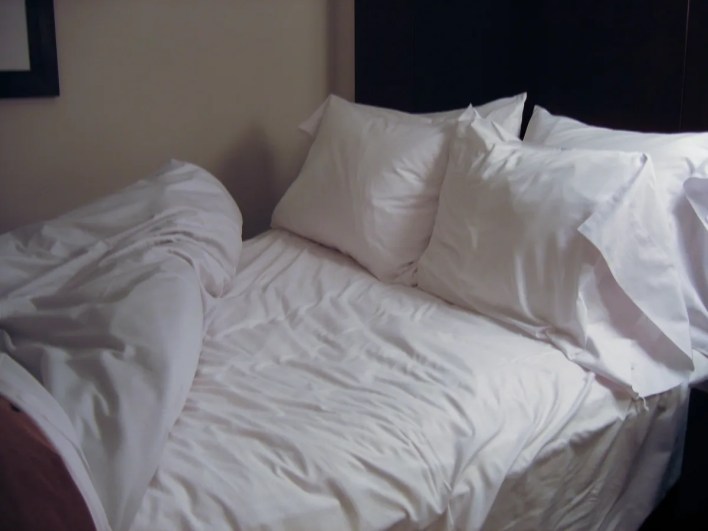
The apartment was quiet when I came in. The kitchen light was still off. A mug from breakfast sat in the sink, and I told myself I would deal with it in the morning.
I moved through the rooms with the loose focus of someone who has already spent their patience elsewhere. In the bedroom, the air was a little stale from the closed window, and the late light made a pale stripe across the floor. The bed looked exactly as I had left it: the quilt smoothed in a hurry, a pillow slightly crooked, the blanket waiting to be pulled back.
I can still see that ordinary scene with unusual clarity, the way you remember the last normal second before something small and startling arrives. I set my phone on the nightstand. I pulled the blanket toward me, expecting only fabric and the faint warmth of a room that had been closed all day. Instead, on the pink stitching of the underside, there was a shape I did not recognize.
The Thing Under the Blanket
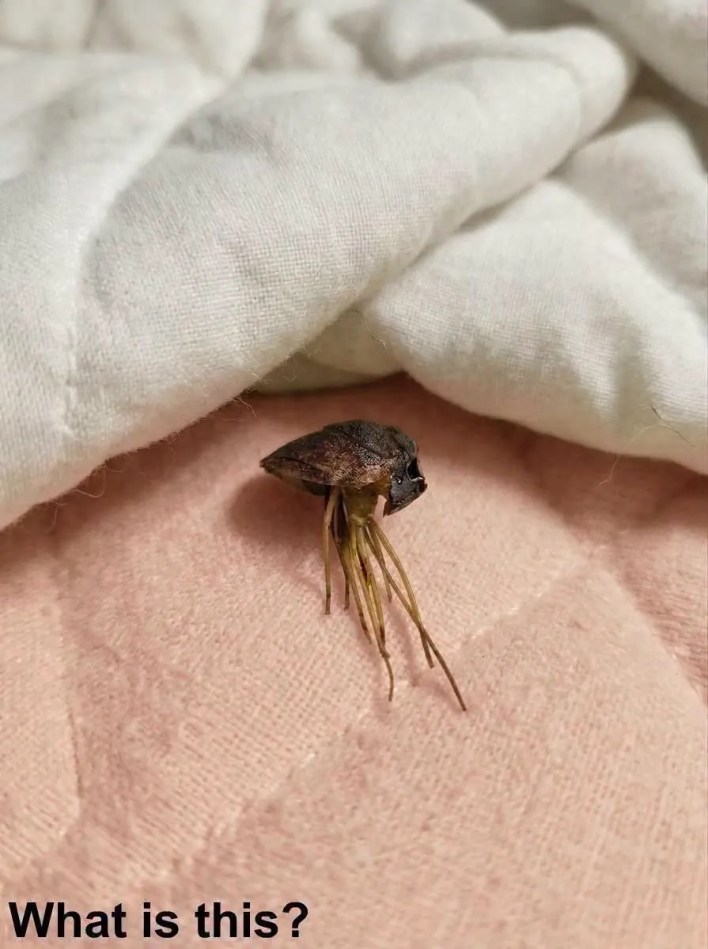
It was not large. If I am honest, it was almost comically small for the amount of alarm it caused. What it lacked in size it made up for in strangeness.
The body looked swollen and uneven, darker than the cloth around it, with a kind of hooded or hunched back. From underneath, several long, thin structures stuck out at awkward angles, pale against the darker body, like legs that had been attached to the wrong creature.
My first thought was a spider. Of course it was. When you find something with a compact body and a handful of long legs in your bed, the mind reaches for the most familiar explanation, and the most unwelcome one. I took a step back without deciding to. I was not going to put my hand anywhere near it. I was not going to shake the blanket like a person in a film. I stood there and looked, and the longer I looked, the less it resembled any spider I could name.
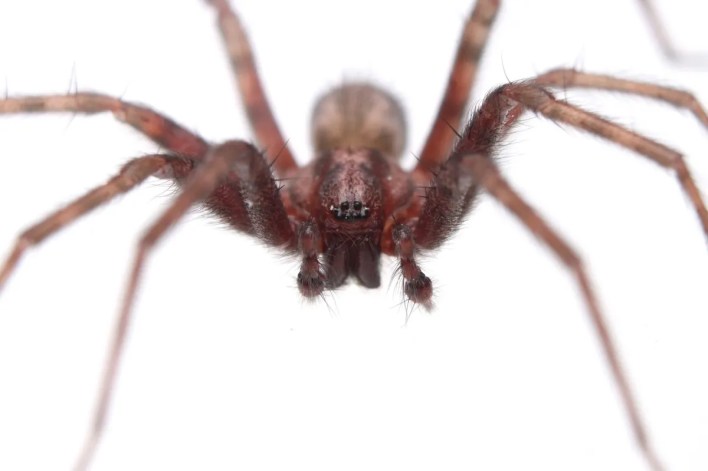
A spider, even an odd one, usually has a body you can divide into two clear parts, and a tidy arrangement of legs. This thing looked almost as if an oversized, irregular shell had been set down on top of a bundle of skinny limbs.
The legs seemed too few, or too bunched, and the “head” — if I was even looking at a head — was hard to find. For a few seconds I wondered if I was looking at a shed skin, or at two insects somehow caught together, or at a bit of plant debris that only resembled an animal because I was tired and the light was poor.
I turned on the bedside lamp. The extra light did not make the object less strange. If anything, it sharpened the details I did not understand: the dull brown of the upper body, the slightly glossy darkness near one end, the way those thin legs hung as if the creature had been paused in the middle of a step. I could hear my own breathing. It felt ridiculous to be this unsettled by something I could have covered with a teacup, and it also felt completely reasonable.
It was in my bed.
The Thoughts You Have Before You Know Anything
Once the first jolt passed, a second, slower kind of worry arrived. If this was a spider, fine — not fine, but at least a category I knew. If it was not a spider, what else might share a mattress with a person? I thought of bed bugs, because anyone who has ever read a late-night warning has that phrase stored away for moments like this. I thought of ticks. I thought, less reasonably, of things that bite and vanish and leave you with a problem you cannot see.
I made myself slow down. Panic is a poor identification tool. I did not want to squash whatever it was before I knew what I was looking at, and I did not want to climb into the bed while it was still there, either.
I folded the blanket farther back, carefully, so I would not lose the creature in a sudden tumble of cloth. It did not run. It did not jump. It simply stayed where it was, which was almost more unnerving than a quick escape would have been.
I reached for my phone and took a photograph, then another, closer, my hand not quite steady. I wanted a record in case it disappeared the moment I looked away. I also wanted something I could compare with pictures later, because I already knew I was not going to sleep easily without a name for it. The camera made the insect look even more improbable, like a tiny design that had no reason to exist in a human bedroom.
How had it gotten there? That question arrived with the others and refused to leave. I do not live in a forest.
I do not usually find insects in the sheets. The window had been closed all day, or I thought it had. I tried to remember whether I had left it open the night before, just a little, for air. I tried to remember whether I had set a bag, a jacket, or a grocery tote on the bed when I came in earlier in the week. The mind, in moments like that, becomes a detective with very little evidence and a lot of imagination.
A Closer Look, and a Better Guess
I sat on the edge of a chair and looked at the photographs I had just taken. On the screen, the “legs” were clearly legs. The dark shape on top was part of the animal, not a piece of dirt riding on its back. What had seemed like a random clump began to organize itself into a body plan, even if it was a body plan I had never studied.
There was a front and a back, a kind of helmet or hood, and those long limbs tucked under the odd upper half.
I typed a clumsy description into a search: small brown insect long legs found in bed. The results were a mixed comfort. Plenty of people had found plenty of things in their sheets, and plenty of those things were harmless. I scrolled past pictures that did not match. I tried again with different words: insect looks like a thorn, tiny armored bug, not a spider weird body in bed. Somewhere in that messy search, a name kept appearing next to insects that had the same unlikely proportions: treehopper.
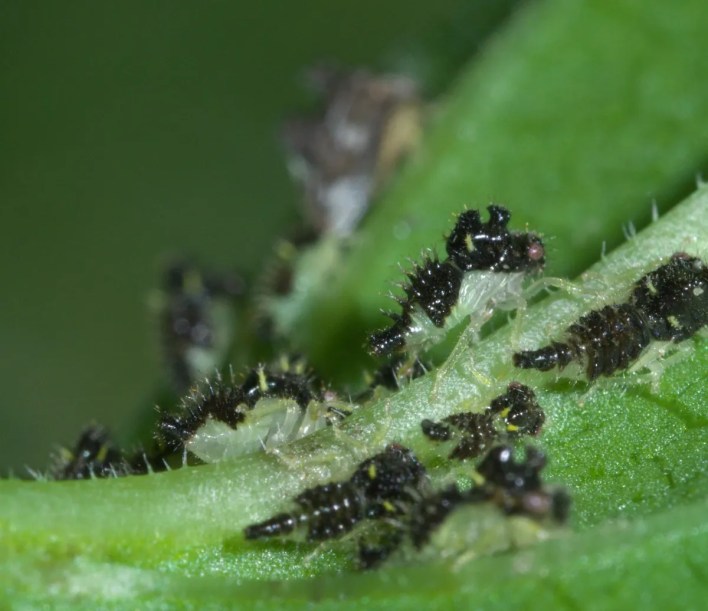
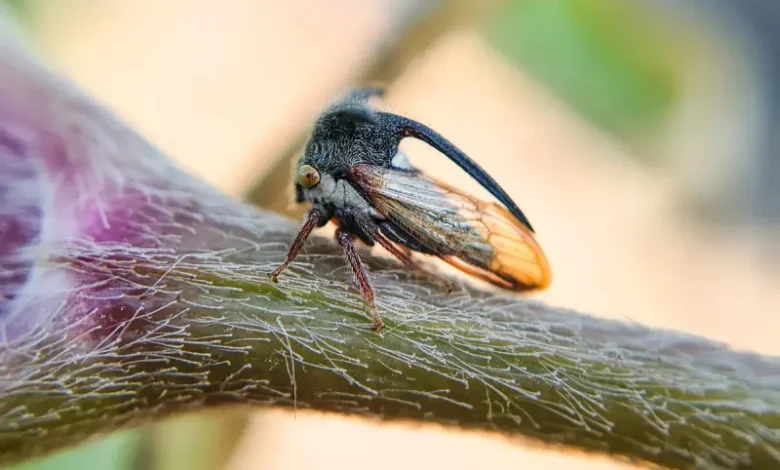
The more photographs I compared, the more the identification held. Treehoppers are small insects in the family Membracidae, related to leafhoppers and, more distantly, to cicadas.
They feed on plant sap. They do not live in mattresses, and they do not seek out people. What they are famous for is a piece of anatomy called the pronotum — an expansion of the first section of the thorax that rises up and often back over the body like a helmet, a hump, a thorn, or some other shape that seems borrowed from a different object. That hood is why a treehopper can look, at first glance, like a mistake, or like a spider wearing a shell, or like a scrap of bark that sprouted legs.
Once I had that idea in mind, the insect on my blanket made a different kind of sense. The “oversized body” was the pronotum. The thin structures were ordinary legs, only easy to misread because the top half of the animal was so strange. I still did not know the species.
I was not going to pretend I did. There are thousands of treehopper species in the world, and many of them are small, brown, and easy for a non-expert to confuse. What I could say, with reasonable confidence, was that I was not looking at a bed bug, and I was not looking at a spider.
The Insects That Look Like Something Else
Later that night, and again the next morning, I fell into a rabbit hole of treehopper photographs. I do not think I have ever been so grateful for an internet full of patient close-ups. The variety is hard to believe until you see it. Some species are modest green humps on a stem. Others have been shaped, over a long evolutionary time, into what look like thorns, buds, or bits of bark, so that a bird glancing at a branch might miss them completely.
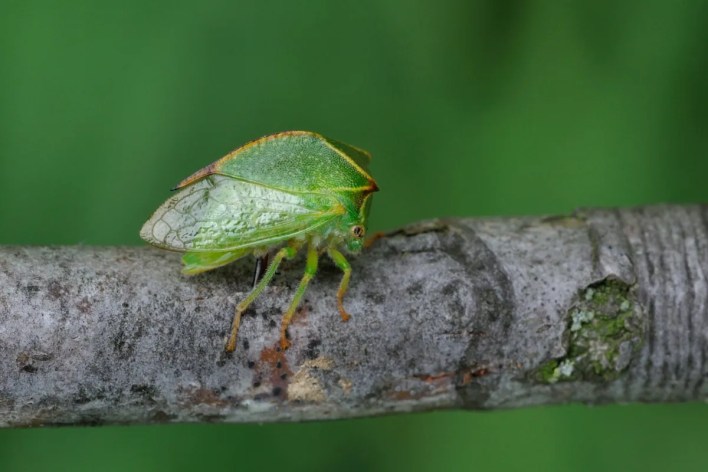
The buffalo treehopper, for example, is a fairly common sight in gardens and orchards in parts of North America and Europe. It is often green, with a triangular profile and little horn-like points that, if you use your imagination, can suggest the shoulders of a tiny bison.
It belongs on plants, including some fruit trees and garden greens, where it feeds on sap. Seeing one on a stem in daylight is almost charming. Seeing a brown cousin on your pillow in lamplight is another experience entirely, even if the family is the same.
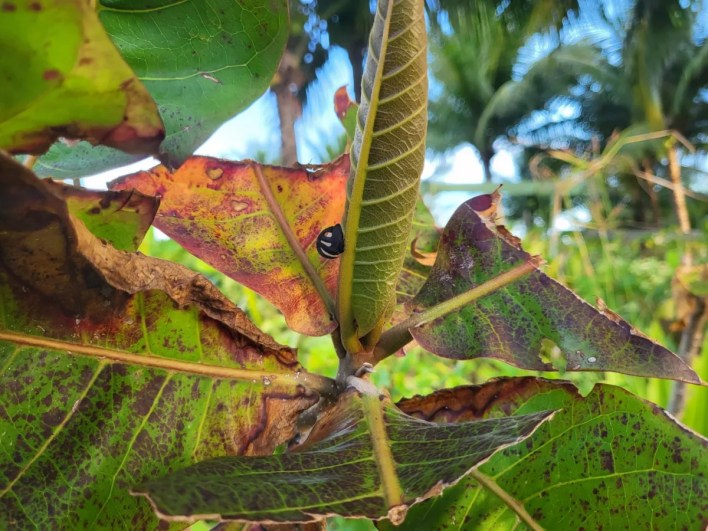
Then there are the thorn-mimics. Some tropical and subtropical species, including the thorn treehopper Umbonia crassicornis, have a pronotum that rises into a point so convincing you could walk past a stem and never notice the animal at all. The disguise is not a costume they put on. It is their body. Researchers have been fascinated by these shapes for decades, and it is not hard to see why.
An insect that can sit still and become, to a predator’s eye, just another thorn has a quiet advantage.
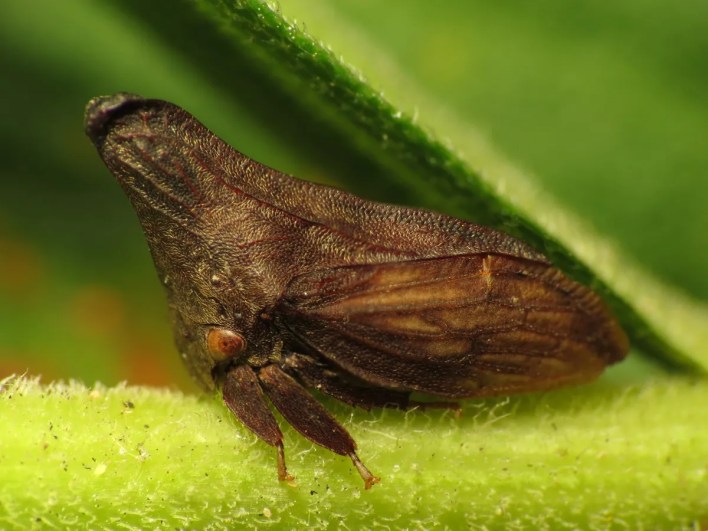
Other species are less about camouflage and more about color. The oak treehopper, Platycotis vittata, can be strikingly marked, and the young ones even more so. They are usually found on oak branches, sometimes in groups. They are not household pests. They are simply part of the life of a tree, which is a useful thing to remember when one of their relatives makes a wrong turn into a human room.
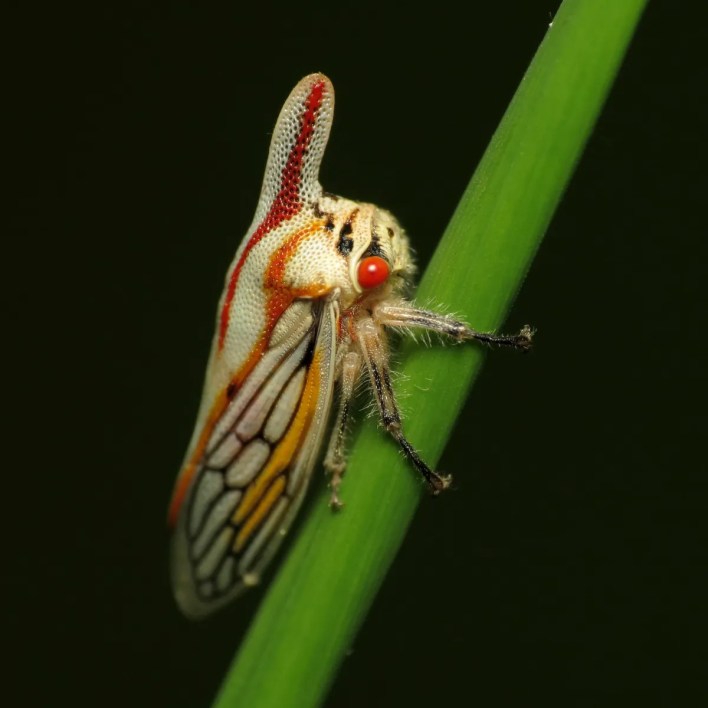
I spent a long time on those pictures, not because I needed a perfect Latin name for my uninvited guest, but because each one made the animal on my blanket less like a threat and more like a very lost specialist.
The world is full of insects that look alarming only because we meet them out of context. A treehopper on a stem is a small marvel. A treehopper on a mattress is a riddle, and the riddle is mostly about us: we do not expect a plant insect to come indoors, so we fill the gap with fear.
How a Garden Insect Ends Up in a Bed
Treehoppers feed on sap. They use piercing mouthparts to drink from stems, twigs, and the soft new growth of plants. A bedroom has no menu for them. They do not nest in fabric. They do not hunt in sheets. If one appears indoors, the usual explanation is an accident.
It could have come through a window or a door left open at the wrong time, especially if there are shrubs, trees, or even potted plants nearby.
It could have hitched a ride on a sleeve, a tote bag, a bunch of cut flowers, or a jacket that had brushed against a branch. I thought about the day again, more carefully this time. There was a moment, late in the afternoon, when I had stood under a small tree near the building entrance to take a call in the shade. I had leaned my shoulder toward the trunk without thinking. I had also, a few days earlier, brought in a bag of groceries and set it on the end of the bed while I unpacked the cold things first. Either of those ordinary actions could have been enough. So could a gap in a screen I had been meaning to fix and had not.

Treehoppers can jump when they are disturbed, which is how they got the second half of their common name. They are not, as a rule, trying to invade a home.
They are trying to move from plant to plant, or to get away from something that startled them. Once inside, a small insect can end up in all sorts of useless places: a windowsill, a curtain fold, the shade of a lamp, and, on a sufficiently unlucky evening, the underside of a blanket.
That last detail still amuses me, in a tired way. Of all the surfaces in the apartment, it chose the one I was about to put my face on. I do not actually think it chose anything. It wandered, or it fell, or it rode in and then crawled toward a dark crease, which is what a small insect often does in a bright room. I was the one who assigned it intention, because a strange animal in a private place feels personal even when it is not.
What It Was Not
It is worth saying plainly what the visitor was not, because the fear in those first minutes had a few specific shapes.
It was not a bed bug.
Bed bugs are small, oval, and flattened, with a look that, once you have seen a clear photograph, is hard to confuse with a hooded, long-legged treehopper. They also tend to leave other signs if they have been living in a mattress for a while. A single odd insect under a blanket is not, on its own, proof of an infestation. I still checked the seams of the mattress the next day, because peace of mind is worth a few minutes of looking. I did not find anything that resembled a bed bug, or any of the tiny dark spots people are told to watch for. The treehopper had been a party of one.
It was not a spider, as I have already said, though I understand why that was my first guess. Spiders have eight legs and a different body plan.
This insect had the jointed legs of a true insect, tucked under a pronotum that threw the whole silhouette off.
It was not a stinging threat. Treehoppers do not sting people. They are not hunting insects. Their mouths are built for plants, not for skin. A person might be startled, and a very unlucky person might get a defensive poke if they handled one roughly, but these are not animals that come looking for a meal in a bedroom. I had no bite. I had no rash. I had a story and a photograph and a slightly faster heartbeat.
It was also not a sign that the apartment had suddenly become “infested” with anything. One lost treehopper is a stray, the way a ladybug on a curtain is a stray, or a moth that follows a porch light inside.
The right response is usually to guide it back out, not to declare a household emergency or reach for a chemical spray it does not need.
A Photograph, a Message, and a Long Pause
Before I went looking for a glass, I did what a lot of people do when they are alone with a question they cannot settle. I sent the photograph to my sister. I wrote, “Do not laugh. What is this, and why is it in my bed?” Then I sat on the chair with the phone in my hand and waited, glancing now and then at the blanket as if the insect might have opinions about being discussed.
She wrote back faster than I expected, first with a row of startled faces, then with a more useful sentence: she did not know, but it did not look like a bed bug to her either.
She asked whether I had touched it. I had not. She asked whether I could get it outside without hurting it, or myself, which was a very sisterly way of saying she was concerned and also already a little entertained. I told her I was going to try, and that I would not get into the bed until I had.
In the quiet after that exchange, I noticed how much of the fear had already changed shape. It was no longer the sharp fear of something that might bite. It had become the duller, more manageable discomfort of not wanting a wild animal — however tiny — in the place I slept. That shift mattered. It made room for curiosity. I looked at the photograph one more time and tried to see the insect as it was, not as the story I had briefly written for it.
The hooded back was almost handsome, in a way I would never have admitted an hour earlier. The legs were delicate. The whole animal looked like a piece of jewelry designed by someone with a very particular sense of humor.
I thought, too, of other small encounters I had forgotten I had. A moth beating against a bathroom light. A ladybug on the inside of a grocery bag. A grasshopper that rode into a car once, years ago, and spent an entire drive clinging to the dashboard while I tried to keep my eyes on the road. None of those moments had felt like a crisis. This one had, because of the setting. A bed has a kind of innocence we guard without thinking. Anything unexpected there feels like a crossing of a line.
Understanding that did not put the insect outside, but it did help me treat the next step as a practical task rather than a scene from a worse night than the one I was actually having.
I filled a glass with nothing but air, found a piece of mail firm enough to act as a tray, and walked back to the bedroom talking under my breath, the way you do when you want your hands to stay steady. “All right,” I said to the treehopper, or to myself. “Let’s get you back where you make sense.”
Getting It Out of the Room
I was not going to leave it where it was, and I was not going to kill it now that I had a better idea of what I was looking at. I found a glass in the kitchen and a piece of stiff mail I could use as a lid.
I approached the blanket the way you approach a cup you do not want to spill. The insect still did not move much. When the glass came down over it, it gave a small, almost offended shuffle, and then it was contained.
I slid the card underneath, turned the whole arrangement over, and walked to the door. The evening had gone fully dark. The air outside was cooler than the apartment, and it smelled faintly of wet leaves from a rain I had missed while I was still at work. I set the glass on the step, eased the card away, and waited. After a moment the treehopper found the rim, climbed, and disappeared in the direction of the shrubs by the path.
I stood there longer than I needed to, feeling a little foolish and a little fond, as if I had just escorted a lost tourist back to the right train.
When I came back inside, I shook the blanket out over the bathtub, more from leftover nerves than from any real suspicion that a second insect was hiding in the folds. I looked along the headboard and under the edge of the mattress. I changed the pillowcase because it made me feel better, not because I thought I had to. Then I washed my hands, turned off the bright overhead light, and sat on the chair again, looking at the bed as if it were a place I had to be reintroduced to.
Sleep did not come right away. I kept seeing the first image: the dark little hood, the splay of legs, the sudden break in a routine I had been counting on.
I also kept seeing the later photographs, the ones of treehoppers on actual plants, looking like themselves instead of like a problem. Eventually the second set of pictures won. I got under a different blanket, left the lamp on the dimmest setting for a while, and let the day end in the way I had wanted, only an hour or two later than planned.
The Morning After, and a Walk to the Shrubs
In the morning the whole episode felt both smaller and more interesting. Daylight has a way of shrinking last night’s fears and sharpening last night’s curiosity. I made coffee and looked again at the photograph. Without the adrenaline, I could admire the oddness of the animal. The pronotum really did look like a piece of design no person would have sketched on purpose.
Nature is full of solutions that seem excessive until you remember they have to work against birds, and weather, and the need to stay on a plant without being eaten.
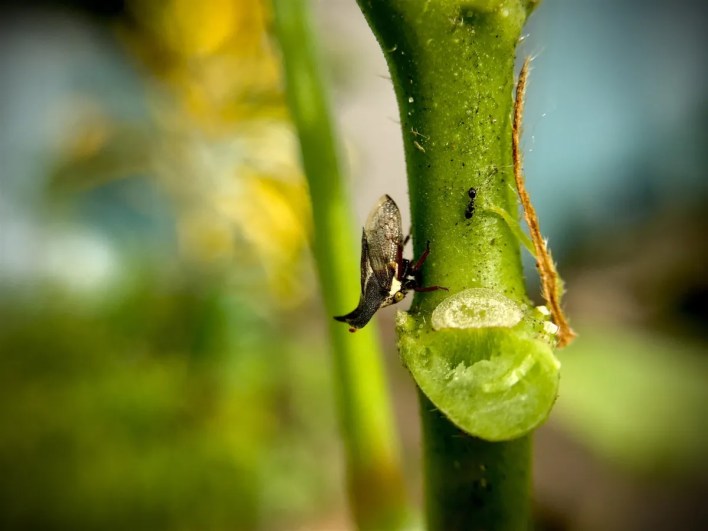
I took my mug outside and walked over to the shrubs by the entrance, the same ones I passed every day without paying attention. I did not find “my” insect, of course. I was not even sure I would have recognized it in that setting. What I did find, after a little patient looking, were stems, new leaves, and the ordinary traffic of a planted border: a few flies, a small beetle, the kind of quiet movement you only notice when you have a reason to look.
I thought about how many treehoppers I might have walked past in my life without seeing them, because they had been doing their job of resembling a thorn or a bump on a twig.
Some treehoppers, I had read the night before, are even tended by ants. The insects excrete a sugary liquid called honeydew, and ants will guard the source of that sweetness the way they guard aphids. The image of a tiny, helmeted insect being “farmed” on a stem would have sounded like a children’s story to me the week before. After the blanket, it sounded like one more reminder that the lives going on in ordinary plants are stranger and more organized than we give them credit for.
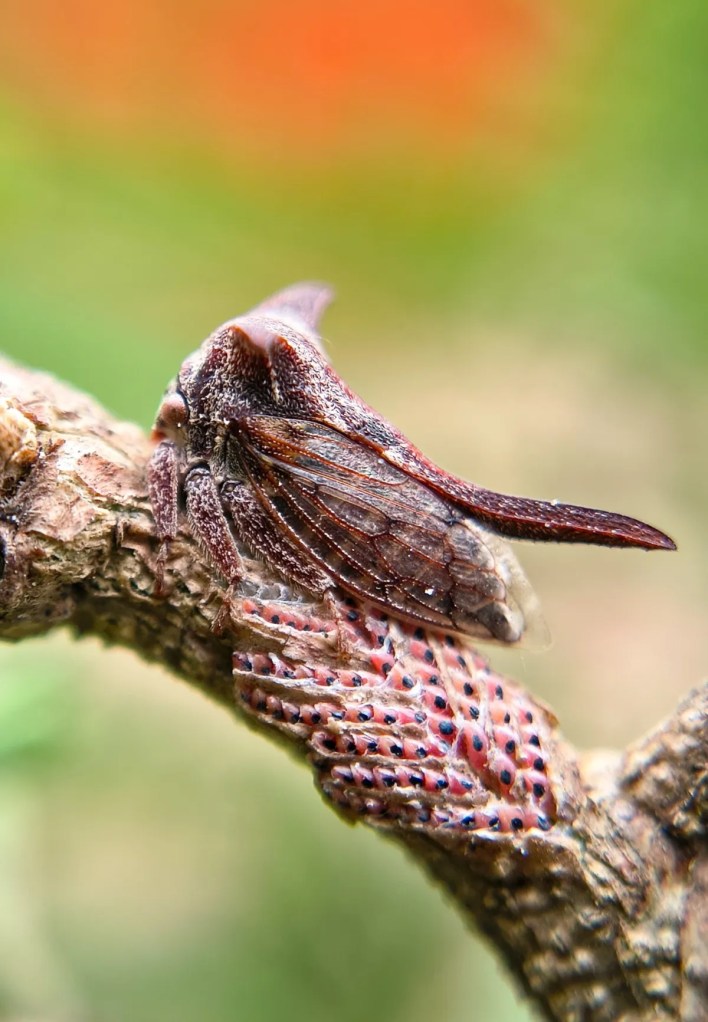
I also learned that some adults stay near their eggs, and that nymphs can look quite different from the adults, sometimes spiny along the back.
I had no eggs on my blanket, and no cluster of young insects, which was further comfort. A breeding population in a bedroom would have been an extraordinary and unlikely event. A single adult that had ridden in on a sleeve was almost boring, once you stripped the moment of its first shock.
Almost boring. Not quite. I still told the story later that day, first in a message with the photograph attached, then out loud to a friend who made the exact face I had made when I lifted the blanket. We laughed, and then we looked up one more gallery of treehoppers, because once you have seen a thorn that walks, it is hard not to want to see the rest of the family.
What I Took From a Very Small Visitor
I would like to say that I am now calm about every unexpected insect in the house. That would be a tidy ending, and it would not be true.
I will probably still freeze for a second if I lift a towel and find something with too many legs. The difference is that I have a better first question than “What is wrong with my home?” The better question is “What am I actually looking at?”
A strange shape is not automatically a dangerous one. A creature in a bed is not automatically a bed bug. A set of long legs is not automatically a spider. The night I found the treehopper, I almost let the first guess make the decision for me. If I had slapped the blanket or shaken it into a panic, I would have missed the small, specific animal that was really there, and I would have gone to sleep with a worse story than the one I eventually got.
The true story is almost gentle.
A plant-feeding insect, built to sit on a stem and disappear into the shape of a leaf or a thorn, took a wrong turn into a human room. It ended up in the one place a person is least prepared to meet a stranger. It did no harm. It was shown the door. In the morning, the shrubs by the entrance looked a little more inhabited than they had the day before, not because anything had changed out there, but because I had been given a reason to notice.
I still keep a glass and a stiff card in a kitchen drawer, not as a monument to that evening, just as a practical habit. I also check the window screen when I think of it, and I try not to drop a jacket on the bed until I have given it a glance, especially in warm months when the plants outside are full of small traffic.
These are small adjustments. They are also a kind of respect for the fact that the outdoors is closer than we pretend it is, and that most of what slips inside is not a crisis, only a traveler with the wrong map.
I have walked past those same shrubs many times since then. Most days I still do not stop. Once in a while I do, especially after rain, when the stems are wet and the new growth is easy to inspect. I have not had another treehopper in the bed. I have, a couple of times, seen small shapes on plants that I might once have dismissed as buds or bits of bark. I do not always know if I am right. I am not an entomologist, and I try not to turn a hobby of looking into a habit of pretending I know more than I do.
What I have now is simpler than expertise. I have a memory of being wrong in a useful way, and a little more patience for the idea that the ordinary world is densely populated with lives that do not revolve around us.
The blanket is just a blanket again. The bed is just a bed. The photograph is still on my phone, though, and I have shown it more often than I expected to. People lean in. They grimace, then they ask what it was, and when I say “a treehopper,” they usually ask me to repeat the word. It is not a name most of us keep ready. After I explain the pronotum, the sap, the accidental ride indoors, there is often a look of relief, followed by a kind of delighted disbelief. We like to think we know the animals that share our rooms: flies, ants, the occasional spider.
A helmeted plant insect in the sheets was not on anyone’s list, including mine.
If you ever lift a blanket and find something you have never seen before, I hope you will give yourself the same pause. Step back. Take a photograph if you can. Look twice before you decide what it must be. You may be looking at a pest that truly needs attention. You may also be looking at a treehopper, or some other small specialist that wandered in from a plant, wearing a body so unusual it takes a moment for the fear to catch up with the facts. In my case, the facts were a relief, and then, a little later, a pleasure. I went to bed that second night without checking the sheets more than once, which I counted as progress.
The last thought I had before I slept was not of legs on pink fabric, but of a small insect finding a stem in the dark and, I hoped, staying there. I never thought it would be this: not a monster in the sheets, only one of nature’s stranger designs, briefly and accidentally, in the wrong place.
Thank you for staying with this story to the end. It is a fictionalized account written for entertainment and general curiosity about a widely shared photograph, not a guide to every insect you might find at home, and not a substitute for a professional identification if you need one. If a strange visitor ever turns up in your sheets, look twice, be kind if you can, and don’t be surprised if the answer is odder — and gentler — than your first guess.