
Remote California Property Offers 40.5 Acres, Panoramic High-Desert Views, and an A-Frame Cabin for $39,900
40.5 Acres in Termo, California, Listed for $39,900 With an A-Frame Cabin and Panoramic Mountain Views
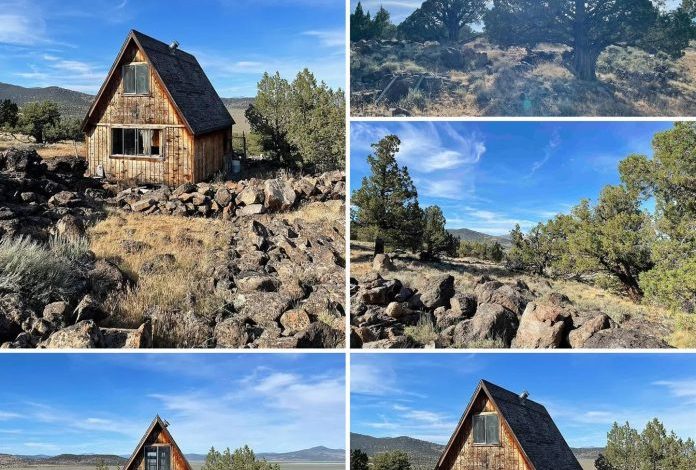
A remote property in Northern California’s high desert is offering buyers the opportunity to purchase 40.5 acres for $39,900. Located at 530-300 Possum Road in Termo, California, in Lassen County, the property features elevated terrain, expansive mountain and valley views, mature juniper trees, volcanic rock formations, and a rustic A-frame cabin structure that requires substantial work.
According to the supplied listing details, the property was listed on August 26, 2026, and consists of two separate legal parcels being offered together. The seller is reportedly open to owner financing with a 50% down payment, potentially giving buyers an alternative to traditional mortgage financing. However, the terms of the financing agreement, the legal status of both parcels, and the property’s development possibilities should all be confirmed before a purchase.
The asking price works out to approximately $985.19 per acre based on the stated 40.5-acre total. While that figure may attract buyers looking for inexpensive rural land, the property is entirely off-grid, has no active well or septic system according to the supplied information, and includes a cabin that is being offered without a warranty or assigned value.
For buyers considering a remote retreat, recreational property, or long-term land holding, the appeal lies in the combination of acreage, privacy, scenery, and potential flexibility. The practical value of those features will depend on access, land-use restrictions, infrastructure costs, and the condition of the existing structure.
Property Overview: 40.5 Acres in Lassen County
The property is situated at 530-300 Possum Road, Termo, CA 96132, in a remote part of Lassen County. The supplied description places the land at approximately 5,305 feet above sea level, with the main elevated area reportedly rising around 500 feet above the valley floor.
The listing information identifies the following features:
- Asking price: $39,900
- Total acreage: 40.5 acres
- Calculated asking price per acre: Approximately $985.19
- Location: Termo, Lassen County, California
- Parcel configuration: Two separate legal parcels offered together
- Reported elevation: Approximately 5,305 feet above sea level
- Terrain: Level building areas, elevated benches, rolling high-desert ground, and volcanic rock formations
- Vegetation: Mature juniper trees, native sage, and open areas
- Existing structure: A rustic two-story A-frame cabin with an elevated wooden deck
- Electricity: No grid connection reported
- Water: No active well reported
- Wastewater: No active septic system reported
- Financing: Seller financing reportedly available with 50% down
These details provide an initial picture of the property, but buyers should verify the acreage, parcel boundaries, access rights, zoning, and infrastructure status through official records and appropriate inspections.
Two Parcels Offered Together
One of the property’s potentially important characteristics is its reported configuration as two separate legal parcels. Rather than purchasing one continuous 40.5-acre parcel, the buyer would reportedly acquire two parcels together in a single transaction.
That distinction could matter for someone who wants to retain the entire property or investigate whether the parcels could be managed or sold separately in the future.
A buyer might choose to keep both parcels to preserve privacy and maintain a larger recreational area. Alternatively, they might investigate selling one parcel later to recover some of the initial purchase cost.
However, the ability to resell a parcel separately depends on its existing legal status, independent access, title conditions, applicable land-use rules, and market demand. A parcel that already exists legally is not automatically guaranteed to be independently buildable or easy to sell.
Before relying on a future resale strategy, buyers should obtain the parcel numbers and assessor maps, review the recorded deeds, and confirm that both parcels can be transferred separately. They should also determine whether each parcel has legal access and whether any easements or restrictions affect its use.
The supplied information mentions the possibility of selling a vacant parcel of approximately 20 acres for $20,000 to $25,000. That is a hypothetical scenario, not a verified resale valuation. Actual proceeds could be lower, and transaction costs, taxes, access requirements, and the time needed to find a buyer would affect the result.
A High-Elevation Setting With Mountain and Valley Views
The property is described as occupying an elevated position overlooking the surrounding valley and distant mountain ranges. Its approximate elevation of 5,305 feet, combined with the reported rise above the valley floor, gives the land a different character from a flat parcel at road level.
The terrain reportedly includes several level building pads, volcanic boulder formations, mature juniper trees, native vegetation, and open high-desert areas. These features may appeal to buyers who prefer natural scenery over a developed residential neighborhood.
The elevated position could provide appealing views and a sense of separation from nearby properties. The listing description indicates that no neighboring homes are visible from the main building bench, although prospective buyers should visit the site to assess the views, surrounding land uses, and actual level of privacy.
The terrain also deserves careful inspection. Areas that appear level from a distance may still require grading, drainage work, or engineered foundations before construction. Rock outcrops can add visual interest while also increasing the difficulty and cost of excavation, road improvements, or utility installation.
Seasonal weather is another consideration. At this elevation, winter snow and changing road conditions may affect access. Buyers should ask about road maintenance, seasonal closures, drainage, and the suitability of the access route for their intended vehicle.
The Existing A-Frame Cabin Requires Major Work
A rustic A-frame structure with an elevated wooden deck is one of the property’s most distinctive existing improvements. The supplied listing describes it as a two-story structure with a steeply pitched roof and timber framing.
However, the cabin is reportedly being sold as-is, with extensive rehabilitation required and no value or warranty assigned to the structure. Buyers should therefore treat it as a potential project rather than as a ready-to-use cabin.
Rehabilitation or Removal?
The first step is to establish whether the cabin’s underlying structure is sound. A qualified building professional should inspect the foundation or support piers, framing, roof structure, floor joists, connections, and deck. Evidence of water damage, rot, insect activity, structural movement, or other deterioration could substantially change the cost of rehabilitation.
If the structure can be repaired, a buyer might investigate converting it into a basic recreational shelter or seasonal cabin, subject to local approvals. If it is unsafe or uneconomical to restore, removing it and evaluating the site for a new structure may be the more practical option.
Neither approach should be assumed to be permitted without checking local requirements. Buyers should also establish whether the existing structure was properly permitted and whether any previous approvals remain relevant to future work.
The cabin’s presence may offer a starting point, but it should not be assigned a financial value until its condition and legal status have been assessed.
Off-Grid Conditions: Electricity, Water, and Septic
This property does not appear to be equipped for conventional residential use. The supplied listing information indicates that it lacks grid electricity, an active water well, and an active septic system. These are major considerations for anyone planning to build or spend extended periods on the land.
Electricity and Solar Power
A buyer planning an off-grid setup could investigate a solar photovoltaic system with battery storage or another suitable independent power source. The appropriate system size would depend on the intended use, including whether the property would be used for occasional visits, seasonal stays, or a full-time residence.
A generator could serve as a supplementary source of electricity, but fuel storage, noise, maintenance, and operating costs would need to be considered.
Before purchasing equipment, buyers should establish where panels could be installed, whether trees or terrain create shading, and whether the proposed system can meet their anticipated needs.
Water Supply
No active well is reported in the supplied information. Buyers should not assume that a new well will be inexpensive, productive, or even feasible without site-specific investigation.
A local well contractor may be able to review nearby well records and provide an initial assessment of expected drilling conditions. Such information cannot guarantee the depth, yield, or water quality of a new well.
Water hauling and storage tanks may be another option for some recreational uses, depending on local requirements and the intended occupancy. A storage system would need appropriate capacity, a reliable refill arrangement, and suitable pumping and treatment equipment where necessary.
Anyone planning a permanent residence should confirm the water-supply requirements with Lassen County before committing to a development plan.
Septic and Wastewater
The listing reportedly identifies no active septic system. A permanent residence would generally require an approved wastewater solution, subject to the applicable local rules and site conditions.
Before purchasing, buyers should ask Lassen County Environmental Health about soil evaluations, septic permitting, setbacks, and any site-specific limitations. The land’s topography, soil characteristics, and distance from water features may affect where a system can be installed.
The total cost of development should include these infrastructure needs rather than focusing only on the purchase price.
Seller Financing: What Buyers Should Understand
The seller reportedly offers owner financing with a 50% down payment and a five-year term. If the arrangement applies to the full $39,900 asking price, the basic figures would be:
- Purchase price: $39,900
- Down payment at 50%: $19,950
- Remaining financed amount: $19,950
- Proposed term: Five years, or 60 months
If the $19,950 balance were repaid in 60 equal monthly installments with no interest or additional fees, the principal alone would amount to $332.50 per month. This is an illustrative calculation, not a confirmed payment quote.
The actual monthly payment could be higher if the seller charges interest or includes other fees. The agreement may also specify a balloon payment, late-payment provisions, default remedies, or other conditions that materially affect the buyer’s obligations.
Before signing, buyers should request the full written terms and have the agreement reviewed by a qualified real-estate professional or attorney. They should confirm how title will be held, when the deed will be transferred, how taxes and other expenses will be handled, and what happens if either party fails to meet the agreement.
Seller financing can offer an alternative to traditional bank financing, but it does not remove the need for careful due diligence or make the purchase automatically affordable.
Understanding the Reported Price History
The supplied information reports that the property sold for $17,000 on July 24, 2026, and was relisted at $39,900 on August 26, 2026.
If both figures and dates are accurate and refer to the same property and parcel configuration, the difference is $22,900, or approximately 134.7% above the reported prior sale price.
That is a substantial change over a relatively short period, but it does not establish that the property’s market value increased by the same percentage. A new asking price is not a completed sale, and a previous transaction may have involved different terms or circumstances.
The property may have been improved, marketed differently, or offered under a different financing arrangement, but the supplied details do not establish whether any of those factors explain the change. Buyers should review the recorded transaction history and current listing documents before drawing conclusions.
The previous sale price can be useful context during negotiations, but it should be considered alongside comparable sales, the cabin’s condition, access, parcel configuration, and the cost of establishing essential services.
Potential Development Costs
The $39,900 asking price may be only the first part of the financial commitment. Anyone planning to use the property for more than occasional undeveloped-land recreation should prepare a realistic budget for inspections, access, infrastructure, and ongoing maintenance.
Potential expenses include:
- Cabin inspection and cleanup: Establishing whether the A-frame can be repaired and estimating any required removal work.
- Road access and grading: Evaluating the existing dirt tracks, drainage, erosion, and seasonal passability.
- Solar or generator setup: Selecting and installing a power system appropriate for the intended use.
- Water supply: Investigating a private well or a suitable water-storage and hauling arrangement.
- Wastewater system: Determining whether a septic system can be approved and installed.
- Construction and permits: Confirming the requirements for any replacement cabin or other structures.
- Property management: Allowing for taxes, fire mitigation, vegetation management, road upkeep, and periodic site visits.
No reliable total development estimate can be established from the supplied listing details alone. Buyers should obtain site-specific quotes before deciding how much they can afford to spend after closing.
What Buyers Should Verify Before Making an Offer
Because the property is remote and lacks several essential services, due diligence should focus on both legal access and practical usability.
Confirm the two parcels. Obtain parcel numbers, assessor maps, and deed records to establish the legal boundaries, acreage, ownership, and whether each parcel can be transferred independently.
Check legal access. Verify recorded ingress and egress rights along Possum Road and determine who maintains the road. Do not assume that a visible track guarantees legal access.
Investigate zoning. Confirm the official zoning designation and permitted uses with Lassen County Planning. The supplied reference to U-C-2 zoning should be verified rather than treated as established fact. Ask specifically about cabin construction, temporary camping, RV use, setbacks, and any restrictions affecting the two parcels.
Inspect the A-frame structure. Determine whether its framing, foundation supports, roof, floors, and deck can safely be retained. Review permit history and establish what approvals would be required for repairs or replacement.
Assess water and septic feasibility. Review nearby well records, seek advice from local contractors, and ask the relevant county office about septic requirements and site suitability.
Review seasonal conditions. Visit the property when practical and ask about winter access, snow, drainage, and maintenance responsibilities.
Read the seller-financing agreement. Confirm the interest rate, payment schedule, fees, title-transfer arrangements, default provisions, and whether a final balloon payment is required.
Compare actual sales. Review recent transactions involving similar remote parcels in Lassen County and nearby areas. Differences in legal access, terrain, water availability, and permitted uses can make per-acre comparisons misleading.
Final Thoughts on 530-300 Possum Road
At $39,900, the property at 530-300 Possum Road offers 40.5 acres of Northern California high-desert terrain, reportedly divided into two legal parcels. Its elevated setting, mountain and valley views, juniper woodland, volcanic rock formations, and existing A-frame structure give it a distinctive character.
The reported seller-financing option could also be attractive to buyers who prefer to explore an arrangement outside conventional bank financing. However, the down payment and advertised price are only part of the equation. The cabin needs substantial work, the land lacks an active well and septic system according to the supplied details, and the cost and legality of future development remain important questions.
The reported increase from a $17,000 sale in July 2026 to a $39,900 asking price in August is also worth examining, but it should not be treated as proof of appreciation or a guaranteed resale opportunity. Likewise, the idea of selling one parcel to recover part of the purchase cost depends on legal, practical, and market conditions that must be confirmed.
For buyers seeking remote land and willing to undertake careful research, this property may be worth investigating. Its suitability will ultimately depend on verified parcel status, legal access, permitted uses, the cabin’s condition, infrastructure costs, and the complete terms of any seller-financing agreement.
This article is for informational purposes only and is based on the property information supplied. Buyers should independently verify all listing details, recorded sales, parcel boundaries, zoning, access rights, financing terms, and development requirements before making a purchase decision.


Listed on Zillow


