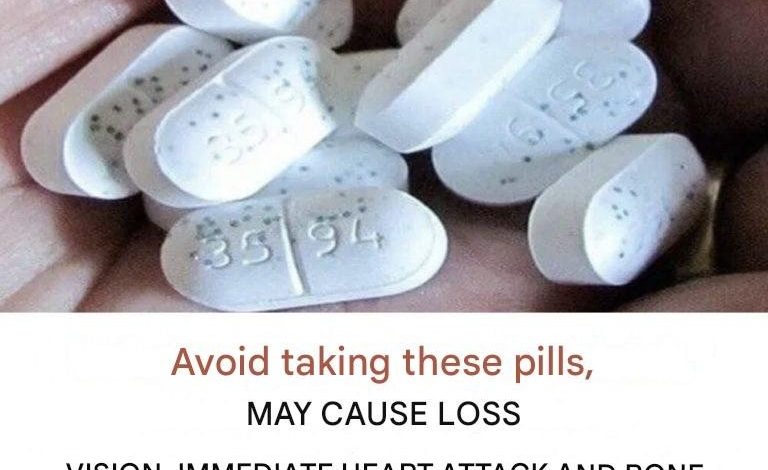
WARNING! THESE TABLETS CAN CAUSE BLOOD CLOTS, BLOOD THROMBOTS, AND HEART ATTACKS
While many over-the-counter and prescription medications are safe when used correctly, certain tablets have been scientifically linked to an increased risk of blood clots (thrombosis), stroke, and heart attack—especially in people with underlying risk factors.
Below are three categories of commonly used medications that carry FDA-recognized warnings for these serious side effects. This is not medical advice—but a call for awareness and caution.
⚠️ 1. Combined Hormonal Birth Control Pills
(Containing estrogen + progestin)
- Examples: Yaz, Yasmin, Ortho Tri-Cyclen, NuvaRing (vaginal ring)
- Risk: Estrogen increases clotting factors in the blood.
- Who’s at higher risk?
- Smokers over age 35
- Those with obesity, migraines with aura, or family history of clots
- People with genetic clotting disorders (e.g., Factor V Leiden)
- FDA Warning: These can increase risk of deep vein thrombosis (DVT), pulmonary embolism, stroke, and heart attack—even in young, healthy women.
✅ Safer alternatives: Progestin-only pills (“mini-pills”), IUDs, or non-hormonal methods.
⚠️ 2. Nonsteroidal Anti-Inflammatory Drugs (NSAIDs)
(When used long-term or at high doses)
-
- Examples: Ibuprofen (Advil, Motrin), Naproxen (Aleve), Diclofenac
- Risk: Chronic use can raise blood pressure, promote fluid retention, and increase risk of heart attack and stroke—even within the first weeks of use.
- FDA Strengthened Warning (2015): “NSAIDs cause an increased risk of heart attack or stroke that can lead to death… risk may occur early in treatment and increase with higher doses.”
✅ Safer alternatives: Acetaminophen (Tylenol) for pain (not inflammation); short-term NSAID use only when necessary.
⚠️ 3. Testosterone Replacement Therapy (TRT)
-
- Examples: AndroGel, Testim, injectable testosterone
- Risk: Can increase red blood cell count (polycythemia), thickening the blood and raising clot risk.
- FDA Warning: Labels must state potential for heart attack, stroke, and venous thromboembolism—especially in older men or those with heart disease.
✅ Important: TRT should only be used for diagnosed hypogonadism—not for “low energy” or aging—and requires regular blood monitoring.
🚩 Red Flags: When to Seek Immediate Help
Stop taking the medication and seek emergency care if you experience:
- Sudden chest pain or shortness of breath
- Swelling, redness, or pain in one leg (sign of DVT)
- Slurred speech, facial drooping, or arm weakness (stroke signs)
- Severe headache, vision changes, or confusion
❤️ Key Takeaways
-
- Never stop prescribed medication without consulting your doctor—but do ask: “What are the risks, and do I truly need this?”
- Disclose all health conditions (smoking, high BP, family history) before starting new meds.
- Use the lowest effective dose for the shortest time possible—especially with NSAIDs and hormones.
💊 Medications save lives—but they also carry responsibilities. Knowledge is your best protection.
If you’re concerned about a medication you’re taking, talk to your doctor or pharmacist. You have the right to understand both benefits and risks.
Stay informed. Stay safe. 💛