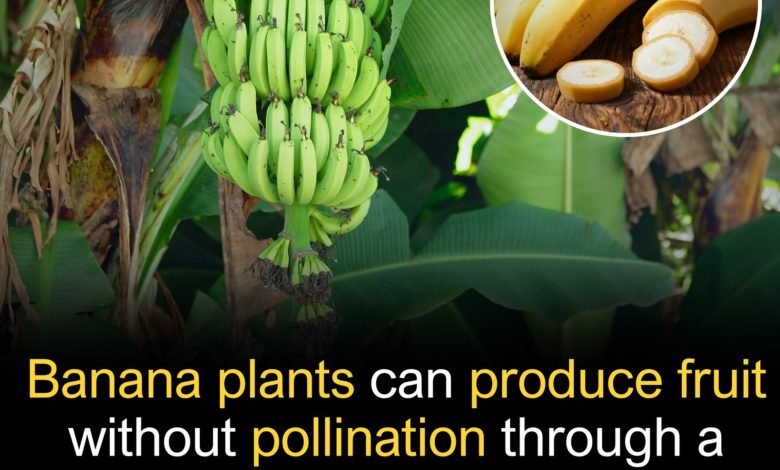
Unlike many other fruits bananas don’t need pollination to produce fruit
Bananas and Parthenocarpy Natures Seedless Wonder
Unlike many fruitbearing plants bananas dont require pollination to produce fruit. Instead they use a fascinating natural process called parthenocarpy a form of asexual reproduction in which the plants ovary develops into fruit without fertilization.
What Is Parthenocarpy?
Parthenocarpy occurs when
A plant bypasses pollination and seed formation
The ovary tissue alone triggers fruit development
The result is a seedless fruit
In bananas this means
The fruit grows without viable seeds leading to the smooth edible flesh were familiar with.
The tiny black dots you sometimes see inside a banana are undeveloped seeds remnants of what would have formed through sexual reproduction.
Why Bananas Are Seedless
Modern bananas like the Cavendish variety are genetically modified through cultivation not lab engineering but through centuries of selective breeding. These bananas
Cannot reproduce through seeds
Are propagated clonally through cuttings or suckers
Rely on parthenocarpy to ensure consistent seedless fruit
This makes bananas easy to eat no pits or seeds to spit out and visually uniform which has helped them become one of the worlds most popular fruits.
More Than Just Bananas
Bananas arent alone. Parthenocarpy also occurs in other fruits such as
Pineapples
Certain grapes like seedless table grapes
Citrus fruits like seedless oranges and mandarins
In agriculture induced parthenocarpy is sometimes used to create seedless varieties through hormone treatments or genetic selection.
Final Thought
Parthenocarpy is a brilliant example of how plants adapt and evolve offering humans fruit thats convenient delicious and easy to cultivate. While bananas might seem simple on the surface the science behind their seedless sweetness reveals a hidden world of natural innovation.
Bananas dont need bees theyre born ready no pollination required.