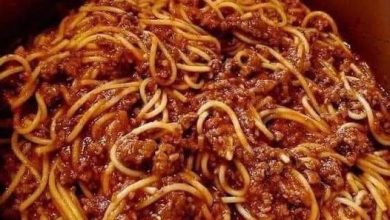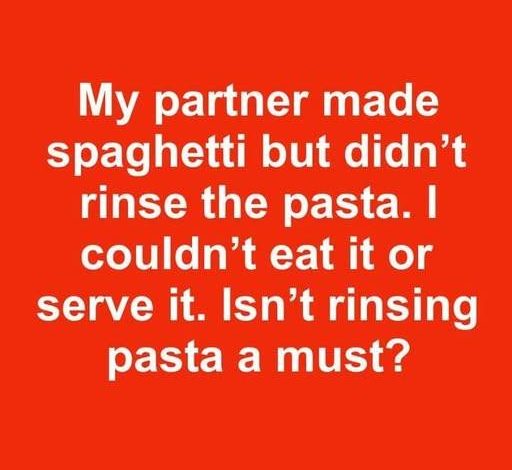
My partner cooked spaghetti but skipped rinsing the noodles. I couldn’t bring myself to eat it or offer it to anyone else. Isn’t rinsing pasta something you’re supposed to do?
The world of cooking is full of traditions, habits, and unspoken rules. One of the most debated questions among home cooks is surprisingly simple: Should you rinse pasta after cooking it?
Your situation with your partner’s spaghetti shows just how divided people can be on this. You shared, “My partner made spaghetti but didn’t rinse the pasta. I couldn’t eat it or serve it. Isn’t rinsing pasta a must?” That reaction illustrates two very different approaches to pasta preparation.
Although pasta is a staple enjoyed everywhere and admired for its versatility, whether or not you rinse it can significantly alter the final dish. Some believe rinsing is necessary for ideal texture, while others insist it removes the natural starch that helps sauce cling. This article breaks down the reasons behind both sides so you can decide what works best for your own cooking.
1. Understanding Starch: The Reason Pasta Becomes Sticky
To get to the heart of the rinsing argument, it’s important to understand starch. Pasta is made mainly from flour and water. Once it starts boiling, starches loosen and move into the water—a process known as gelatinization.
Why Pasta Clumps:
As pasta cooks, the released starch forms a thin coating on the noodles. When the pasta cools even a little, that coating behaves like glue, making the strands stick together and feel gummy.
A Cleaner Texture:
Many cooks rinse pasta to wash off this excess starch. Doing so removes the sticky outer layer and keeps the noodles separate, leading to a smoother, more pleasant bite.
2. How Starch Affects Flavor and Sauce Stickiness
The debate extends beyond texture to how well the pasta interacts with sauce.
When Pasta Isn’t Rinsed:
You mentioned that leaving the starch on can make the noodles clump and taste heavy. That coating can dull flavors and make the dish feel dense. Rinsing removes that barrier so the pasta complements the sauce instead of competing with it.
The Argument for Keeping Starch:
Some cooks—especially those following Italian methods—believe the starch is essential. When hot pasta goes straight into the sauce, the starchy surface helps thicken and bind everything together, creating a silky, unified finish.
The Case for Rinsing:
For cold dishes, rinsing is clearly beneficial. For pasta salads or recipes that require the noodles to cool quickly, rinsing prevents clumping and brings the temperature down fast.
3. The Science Behind Proper Pasta Cooking
Even before rinsing becomes a question, the cooking process plays a major role.
Use Plenty of Water:
A large pot with lots of water helps prevent noodles from sticking and ensures the temperature stays high. A typical guideline is 4–6 quarts of water per pound of pasta.
Don’t Skip the Salt:
Well-salted water seasons the pasta from within. A general rule is 1–2 tablespoons of salt per gallon of water.
Cook to Al Dente:
Stopping the cooking at the right moment prevents mushiness. Directly tossing hot pasta into sauce halts cooking for warm dishes, while cold water does the job for recipes that need chilled noodles.
4. When You Should—and Shouldn’t—Rinse Pasta
There is no universal rule; it simply depends on the dish.
| Type of Dish | Should You Rinse? | Why |
|---|---|---|
| Hot pasta dishes (like marinara, alfredo, carbonara) | No | Starch helps the sauce adhere and enhances the final texture. |
| Cold pasta salads | Yes | Rinsing cools the pasta and prevents sticky clumps. |
| Stir-fried or Asian-style noodle dishes | Yes | Removing starch keeps the noodles from sticking in a hot pan. |
In Italy, the birthplace of pasta, rinsing is generally avoided. Their cooking philosophy embraces starch as a natural part of the dish.
5. What to Do if Unrinsed Pasta Turns Sticky
If the pasta ends up clumping because it wasn’t rinsed, there are simple fixes:
- Use the sauce right away: Hot sauce and hot pasta combine smoothly and distribute starch evenly.
- Add a little fat: A touch of butter or olive oil can help loosen the strands.
- Quick rinse: If the pasta has turned into one big clump, a brief rinse can help rescue it—though you may lose some starch needed for sauce adhesion.
6. Final Suggestions for Better Pasta
Many chefs say the best choice depends on the type of dish you’re making.
- For traditional Italian-style meals, keep the pasta unrinsed.
- For cold dishes or anything requiring separated noodles, a rinse works best.
- Always aim for al dente by tasting before the suggested cooking time is up.
Understanding how starch behaves and choosing your method intentionally will help you get the perfect texture for any pasta dish you make.