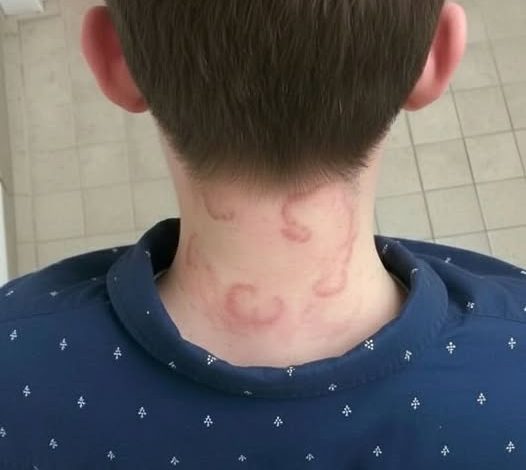
My 8 year old son been having this for 2 months straight it’s gotten worse from the first time he had this.. What is it
What started as a simple itch quickly became something far more serious than anyone expected.
At first, the skin irritation felt ordinary—just an uncomfortable burning sensation followed by red, swollen patches that appeared without warning. The marks faded after a few hours, only to return in different places, as if the body were playing a cruel and confusing game. Like many people, he assumed it was an allergy. Maybe it was something he had eaten, touched, or inhaled without realizing. He tried changing soaps, avoiding certain foods, and even switching laundry detergents, hoping the problem would disappear on its own.
But it didn’t.
Instead, the symptoms became more frequent and more intense. What once felt like mild irritation turned into relentless itching that disrupted sleep and daily life. When he finally went to the doctor, the diagnosis came with a word he had never heard before: urticaria.
That single word changed everything.
Urticaria—more commonly known as hives—is not just a surface-level skin problem. It is an immune system reaction involving mast cells, which release histamine and other chemicals into the bloodstream. When this release becomes excessive, tiny blood vessels begin to leak fluid into the surrounding tissue. The result is the raised, red welts that define hives, often accompanied by intense itching or burning sensations.
For many people, the condition remains uncomfortable but manageable. For others, however, it can evolve into something far more frightening.
As his flare-ups progressed, swelling began to spread beneath the skin. His lips enlarged without warning. His eyelids puffed until his vision felt strained. A tight sensation crept into his throat, making every swallow feel heavier than it should. This deeper reaction is known as angioedema, a condition that affects the layers of tissue beneath the skin’s surface. While hives may be visible and irritating, angioedema can be dangerous—especially when it involves the face, tongue, or airway.
What once felt like a nuisance now carried real fear.
Doctors moved quickly to investigate potential triggers. Urticaria can be caused by a wide range of factors: certain foods, medications, viral or bacterial infections, insect stings, temperature changes, pressure on the skin, and even emotional stress. In some people, intense exercise or sudden changes in weather can provoke an outbreak. Yet in many cases, no clear trigger is ever found. This uncertainty makes the condition especially frustrating for those who live with it.
Medical professionals classify urticaria based on how long it lasts. When hives persist for less than six weeks, they are considered acute. When they continue beyond that point—sometimes flaring unpredictably for months or even years—they are labeled chronic. Chronic urticaria often takes an emotional toll, leaving patients anxious about when the next outbreak will strike and how severe it might be.
Treatment focuses on calming the immune system and preventing escalation. Non-sedating antihistamines form the foundation of care, sometimes prescribed at higher-than-standard doses to control persistent symptoms. During severe flare-ups, short courses of corticosteroids may be used to reduce inflammation quickly. Cooling lotions and menthol-based creams can soothe surface discomfort, but doctors emphasize that symptom relief alone is not enough.
Understanding the warning signs is just as important as treating the reaction itself.
Swelling around the lips, eyes, or throat should never be ignored. Difficulty breathing, swallowing, or speaking requires immediate medical attention. In rare cases, severe urticaria and angioedema can progress toward anaphylaxis, a life-threatening emergency that demands rapid intervention. Recognizing when a skin reaction crosses the line from uncomfortable to dangerous can make the difference between a manageable episode and a medical crisis.
Over time, he learned to live with the condition rather than fear it. He began tracking potential triggers, noting what he ate, where he went, and how he felt before each flare-up. He learned to respond early instead of waiting things out, taking medication at the first sign of trouble rather than hoping the symptoms would fade. Slowly, the unpredictable became more controllable.
What once seemed like “just hives” turned into a powerful lesson about listening to the body.
Skin reactions are often dismissed as minor or cosmetic problems, something to tolerate rather than treat seriously. But sometimes, they are the visible signal of a deeper process unfolding beneath the surface. The skin, after all, is not just a protective layer—it is an active participant in the immune system’s response to danger.
Recognizing that difference, and acting on it, can change everything.
The key lesson is simple yet profound: itching that escalates, swelling that spreads, or symptoms that interfere with breathing are never ordinary. They are messages. And when the body sends those messages, paying attention can quietly save a life.
Disclaimer: All stories published on this website are for entertainment and storytelling purposes only. They do not have an identified author and are not claimed to be based on real events or people. Any resemblance to actual persons or events is purely coincidental.