
Maine Fixer-Upper for $99,500: Historic Farmhouse, 27.6 Acres, Pastures and Lake Brook Frontage
Abandoned 1900 Maine Farmhouse on 27.6 Acres With Apple Trees and Brook Frontage for $99,500
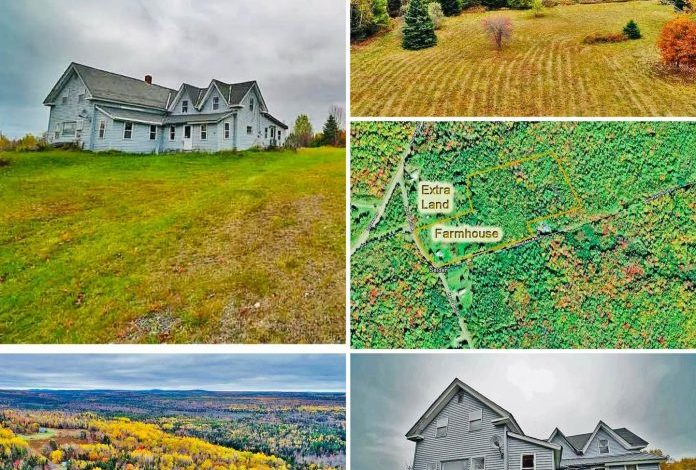
A historic farmhouse, nearly 28 acres of rural Maine land, open pastures, mature apple trees, and brook frontage come together at 479 Harris Hill Road in Weston, Maine. Listed at $99,500, the property offers a substantial rural footprint for buyers interested in restoring an older home while creating a homestead, recreational retreat, or small agricultural property.
The farmhouse dates to 1900 and contains approximately 1,700 square feet, with four bedrooms and one full bathroom. The surrounding 27.60 acres reportedly include mowed fields, mixed woodland, established apple trees, and approximately 400 linear feet of frontage along Lake Brook.
There is an important qualification, however: this is not a move-in-ready property. The supplied listing details describe an abandoned home with unfinished interior areas and significant rehabilitation needs. The property is also being offered under cash-only terms, which may limit the number of potential buyers.
Property Details and Asking Price
Located in Weston, in Aroostook County, the property is identified as 479 Harris Hill Road, Weston, ME 04424. The supplied information lists parcel number WSTTM015L019 and an asking price of $99,500, with the listing reportedly dated October 24, 2025.
The main property details include:
- Asking price: $99,500
- Land: 27.60 acres
- House: Approximately 1,700 square feet
- Bedrooms: 4
- Bathrooms: 1 full bathroom
- Year built: 1900
- Architectural style: New Englander farmhouse
- Brook frontage: Approximately 400 linear feet along Lake Brook
- Annual property taxes: Reported at $1,206 for 2024
- Assessed value: Reported at $68,900 for 2024
- Utilities: Private well, private septic system, and existing electrical service reported
- Purchase terms: Cash only
- HOA fees: None reported
At the asking price, the property works out to approximately $3,605 per acre, or $58.53 per square foot of house area. These figures provide a useful starting point, but the home’s actual value depends heavily on its structural condition, the functionality of its systems, and the cost of completing the rehabilitation.
The listing status, current price, tax figures, acreage, and property features should be independently confirmed before any purchase decision.
A 1900 Farmhouse With Significant Restoration Needs
The house has the traditional proportions of an older New England farmhouse, but the supplied description indicates that substantial work remains before it can be considered habitable.
Interior photographs are described as showing rooms in various stages of demolition. Some ceiling tiles have reportedly fallen, exposing framing, insulation boards, and unfinished wall sections. Flooring conditions vary, with worn carpeting, vinyl, and exposed subfloors described in different rooms.
The first floor reportedly contains a living room, kitchen, formal dining room, primary bedroom, mudroom, and sunroom or enclosed porch. The upper level includes additional bedrooms and flexible space beneath the roofline.
This layout may provide a useful foundation for a restoration project, but buyers should not assume that the existing room arrangement, bedroom count, or finished square footage will remain acceptable under current building requirements without verification.
The house’s age also makes a detailed inspection especially important. Floor framing, sill plates, foundation masonry, roof connections, and areas around windows and exterior doors should be examined for deterioration, moisture damage, insect activity, and structural movement.
Roof, Siding, Foundation, and Porches
The exterior is described as having light-blue vinyl siding, replacement windows, and a combination of metal roofing and asphalt shingles. While the siding reportedly appears largely intact in some views, visible exterior condition alone cannot establish whether the underlying walls and roof structure are sound.
Roof junctions, chimney flashing, and connections between the main house and additions deserve particular attention because poorly sealed areas can allow moisture to enter concealed framing.
The side-entry deck and sunroom or porch are reported to have deteriorated wood, with some support components potentially requiring replacement. Any rebuilding work should begin with an assessment of the underlying framing, footings, and connections rather than cosmetic repairs alone.
The property also reportedly has an older fieldstone and concrete foundation, accessible from the interior and through a bulkhead entrance. Older foundations can experience moisture intrusion, uneven settling, or deterioration, but the condition of this particular foundation cannot be established from the supplied information alone.
A qualified inspector or structural professional should assess the foundation and framing before buyers finalize a renovation budget.
Heating, Electrical, Plumbing, and Water Systems
The mechanical systems may represent one of the largest sources of uncertainty.
The supplied information does not identify an operational central heating system. Buyers considering year-round use will need to determine what equipment, if any, remains functional and what type of heating installation is appropriate for the house and the local climate.
A ductless heat pump system or a properly installed wood-burning appliance may be worth evaluating, but the right solution depends on the home’s insulation, electrical capacity, layout, and applicable safety requirements.
An existing circuit-breaker panel is reported. However, a panel’s presence does not establish that the wiring throughout the house is safe or complete. Gutted rooms and exposed wiring should be inspected by a licensed electrician, with any required repairs and permits included in the budget.
The property is also described as having a private well and septic system. Both should be treated as unverified until professionally inspected. Buyers should test the well water, assess the pump and pressure system, and determine whether the septic tank and disposal field meet applicable requirements.
Because the house has reportedly been abandoned, plumbing should be checked for freeze damage, leaks, and failed connections before water service is restored.
Pastures, Apple Trees, and 27.6 Acres of Rural Land
The acreage is a major part of the property’s appeal. Rather than offering only a small homesite, the parcel reportedly combines open fields with wooded sections, creating several possible uses depending on the land’s condition and applicable regulations.
The mowed pastures may provide a starting point for gardens, hay production, or limited livestock activities. Buyers interested in horses, cattle, sheep, or other animals should evaluate fencing, drainage, soil quality, available water, and the amount of usable grazing land before making plans.
Established apple trees near the farmhouse add another traditional homestead feature. Their current health, variety, and productivity should be verified in person rather than assumed from the listing description.
The wooded portions reportedly contain a mix of hardwoods and softwoods. These areas may provide privacy, wildlife habitat, and opportunities for responsible woodland management. Any potential timber value would require an assessment of tree species, volume, quality, access, and harvesting costs.
Together, the fields, orchard, and woodland offer flexibility that may appeal to buyers looking for a property where the land is as important as the house.
Approximately 400 Feet of Lake Brook Frontage
The property reportedly includes about 400 linear feet of frontage along Lake Brook. This natural feature adds another dimension to the rural setting and may be attractive to buyers who value water views, wildlife, and access to a flowing brook.
The actual uses permitted along the brook will depend on applicable environmental rules, property boundaries, and any restrictions affecting the shoreline. Buyers should also evaluate seasonal water levels, drainage, erosion, and the possibility of flooding.
Although the supplied description mentions potential livestock watering, irrigation, kayaking, and fishing, these uses should not be assumed to be unrestricted. Water rights, water quality, access conditions, and applicable regulations may affect what is practical or permitted.
The brook is best considered a property feature whose recreational and practical value requires site-specific verification.
Outdoor Recreation and an Optional Additional Parcel
Weston’s location in northern Maine may appeal to buyers who enjoy rural recreation and outdoor activities. The supplied listing information describes connections to regional snowmobile and ATV trail systems, as well as proximity to the East Grand Lake area.
However, buyers should verify the exact trail locations, whether access crosses the property, and whether any permissions or seasonal restrictions apply. Proximity to a trail does not necessarily guarantee permanent or unrestricted access.
The seller reportedly has an adjacent 5.2-acre parcel available under separate negotiation. If that parcel remains available and can be purchased on acceptable terms, it could potentially expand the total landholding to approximately 32.8 acres.
The neighboring parcel should be evaluated separately, including its price, boundaries, access, deed restrictions, and whether combining the two properties would provide any practical benefit.
What Could the Renovation Cost?
The supplied rehabilitation budget estimates approximately $34,000 for a DIY project and $78,500 for professional work. The listed categories include roof and chimney repairs, porch reconstruction, plumbing, heating, electrical work, insulation, drywall, flooring, cabinetry, well and septic servicing, and interior finishes.
These figures should be treated as preliminary estimates rather than confirmed contractor quotes. Actual costs can vary significantly depending on concealed damage, material prices, local labor rates, permit requirements, and the condition of the existing systems.
Older homes can also reveal additional problems after demolition begins. Damaged structural framing, foundation repairs, hazardous materials, inadequate insulation, or a failed septic system could increase the total expenditure beyond the supplied budget.
For that reason, buyers should obtain inspections and itemized estimates before deciding whether the property fits their financial plans. A contingency reserve is particularly important for a house that has been vacant and partially stripped.
The difference between DIY and professional costs also depends on the buyer’s skills, available time, and ability to complete work legally. Electrical, plumbing, heating, structural, and septic work may require qualified professionals or permits.
Is the Asking Price Attractive Compared With Other Properties?
The supplied comparison table includes a 25-acre raw timberland parcel reportedly priced at $68,000, a renovated 10-acre rural home in Linneus reportedly listed at $225,000, and a smaller fixer-upper in Houlton reportedly priced at $85,000.
These examples illustrate the different types of properties available in the broader region, but they do not establish the market value of 479 Harris Hill Road. Their current status, sale history, condition, and precise comparability have not been independently verified.
The subject property’s appeal comes from the combination of acreage, an existing farmhouse, reported private utilities, open fields, apple trees, and brook frontage. Its weaknesses include the cash-only requirement and the uncertain cost of returning the house to usable condition.
The supplied analysis estimates that completing the renovation for approximately $40,000 to $50,000 would put the purchase and rehabilitation cost around $139,500 to $149,500 before closing costs, financing costs if applicable, permits, and unexpected repairs.
That calculation is a budgeting scenario, not proof of future equity. A renovated property’s resale value depends on comparable completed sales, the quality of the work, market conditions, and whether the land and house meet buyers’ expectations. Any claimed equity should be evaluated using verified local sales and realistic repair estimates.
Annual Property Taxes and Ongoing Costs
The supplied information reports annual property taxes of $1,206 for 2024, equivalent to $100.50 per month. The reported assessed value is $68,900, and no HOA fees are listed.
These figures may help buyers estimate basic holding expenses, but they should be confirmed with the Town of Weston. Current taxes may differ from the 2024 amount, and the assessment should not be confused with a verified market valuation.
Property taxes are only one part of the ongoing cost. Insurance, maintenance, road access, snow removal, heating, well and septic upkeep, and repairs may add substantially to the annual budget.
For buyers planning a gradual restoration, it is important to account for the cost of protecting the house and land while work is underway, especially during northern Maine winters.
Who Might Be Interested in This Property?
This farmhouse may appeal most to experienced renovators, tradespeople, and homesteaders who understand the demands of an older rural property.
A buyer with carpentry or restoration experience may be able to complete some work personally, provided the work complies with applicable codes and permit requirements. Buyers seeking a small farmstead may also appreciate the combination of open fields, orchard trees, woodland, and brook frontage.
Outdoor recreation enthusiasts could find the location worth exploring, subject to confirmation of trail access and permitted uses. Land-focused buyers may value the acreage independently of the house, although the property’s actual land value should be assessed using verified local comparables.
On the other hand, this is unlikely to suit someone who needs an immediately habitable home or depends on conventional mortgage financing. The reported cash-only terms and extensive rehabilitation needs create financial and practical barriers.
Essential Checks Before Buying
Before making an offer, prospective buyers should:
- Arrange a full structural inspection. Evaluate the foundation, sill plates, floor joists, roof, porch supports, and signs of moisture or insect damage.
- Inspect the well and septic system. Obtain a water-quality test and professional assessments of the pump, septic tank, and disposal field.
- Review electrical and heating systems. Determine whether existing wiring is safe and what is required to restore reliable year-round heating.
- Obtain written renovation estimates. Price major repairs separately and include a contingency for concealed damage.
- Confirm the legal property boundaries. Review the deed, survey information, parcel map, and any recorded easements.
- Verify brook frontage and trail access. Establish the boundaries and applicable rights or restrictions affecting water and recreational use.
- Confirm zoning and permitted uses. Check current requirements for residential occupancy, agricultural activities, outbuildings, and any planned changes.
- Review taxes and title. Confirm current taxes, ownership, liens, and other recorded restrictions.
- Verify cash-only purchase terms. Confirm the seller’s requirements and discuss closing arrangements with a qualified real estate professional or attorney.
Final Thoughts
Listed at $99,500, 479 Harris Hill Road combines a circa-1900 farmhouse with 27.60 acres of pasture, mixed woodland, mature apple trees, and reported Lake Brook frontage. The acreage and existing house may make it interesting to buyers who want more than a conventional residential lot and are prepared to take on a substantial restoration project.
The central trade-off is straightforward: the property offers land and an existing structure at a relatively low asking price, but the house’s condition and the cash-only requirement create meaningful risks. The reported well, septic, electrical service, and exterior shell should not be assumed functional simply because they are present.
For an experienced renovator or homesteader, the property may merit further investigation. The decision should ultimately depend on professional inspections, verified access and land-use rights, realistic renovation costs, and a careful comparison with completed sales in the area.
Property information note: This article is based on the supplied property details. The current listing status, asking price, tax records, comparable properties, renovation estimates, trail access, and regulatory details have not been independently verified. Buyers should confirm all material information before proceeding.


Listed on Zillow


