Grand 1901 Southern Home With 8 Fireplaces, Wraparound Porch and 5,479 Sq Ft
Just $11,000: Milwaukee Cape Cod Requires $77,640 in Essential Repairs
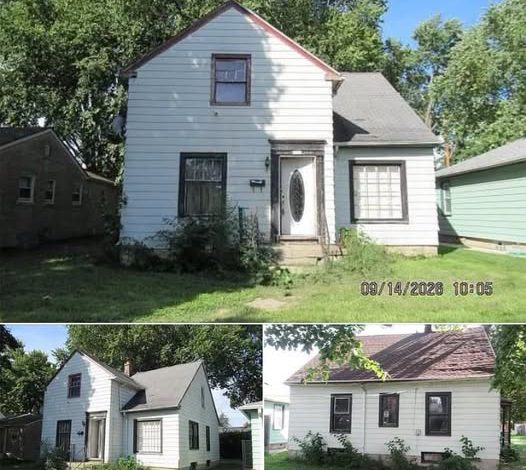
A two-bedroom Cape Cod home in Milwaukee, Wisconsin, is attracting attention with an asking price of just $11,000. Located at 4745 N 50th Street, Milwaukee, WI 53218, the property offers approximately 882 square feet of living space, one full bathroom, a full basement, an expandable attic, public utilities, and a 5,662-square-foot lot.
But this is far from a typical bargain home.
The property is being sold as a City of Milwaukee tax foreclosure, and the listing makes clear that substantial rehabilitation is required. Most notably, the foundation is described as being in extremely poor condition, making structural repairs the central issue for any prospective buyer.
The home has also experienced a dramatic $78,000 price reduction, bringing the current asking price down to $11,000. While that headline number may immediately catch attention, the purchase price represents only a small portion of the potential investment required to bring the property back into good condition.
A $94,207 Scope of Work
According to the supplied listing information, the City has identified a total scope of work estimated at approximately $94,207.
Within that amount is an Essential Scope of Work estimated at approximately $77,640.
These essential repairs are particularly important because the buyer is required to complete them within 180 days and obtain City verification that the work has been completed before the performance deposit can be returned.
That requirement significantly changes the way this property should be evaluated.
Simply having enough money to purchase the home for $11,000 is not sufficient. Buyers must demonstrate the financial ability to cover the purchase as well as the required rehabilitation.
The Effective Cost Is Much Higher Than $11,000
At first glance, $11,000 for a two-bedroom house in Milwaukee sounds almost unbelievable.
But adding the purchase price to the estimated essential repairs produces approximately $88,640 before closing costs, permits, insurance, financing, taxes, performance-deposit requirements, and unexpected construction expenses.
If the full $94,207 scope is completed, the purchase price plus the listed work would total approximately $105,207 before those additional expenses.
That is a much more realistic starting point for evaluating the opportunity.
A 1939 Cape Cod
The house was built in 1939 and features a traditional Cape Cod design.
The one-and-a-half-story layout includes two bedrooms on the main level, a full bathroom, a living room, dining room, compact kitchen, full basement, and expandable attic.
The architectural style gives the property a classic residential appearance, while the relatively small footprint could make certain renovation tasks more manageable than rehabilitating a much larger home.
However, the foundation problem remains the primary concern.
Foundation Is the Biggest Issue
The listing describes the foundation as being in extremely poor condition.
That is not a minor cosmetic problem.
Foundation issues can affect floors, walls, doors, windows, plumbing, and the overall structural stability of a house. Depending on the underlying cause, repairs can involve structural reinforcement, masonry work, excavation, drainage improvements, waterproofing, or replacement of portions of the foundation.
Because of the seriousness of the disclosed condition, prospective buyers should review the City’s detailed scope of work and obtain professional advice before making an offer.
Full Basement
The property has a full basement with a block foundation.
Normally, a full basement can be a useful feature, providing additional storage and mechanical space.
Here, however, the basement should be viewed primarily through the lens of the foundation condition.
Buyers should investigate cracks, bowing walls, moisture, drainage, settlement, structural movement, and any previous repair attempts.
A structural engineer may be particularly valuable in determining the extent of the problem and the appropriate repair strategy.
Two Main-Level Bedrooms
Both bedrooms are located on the main level.
The primary bedroom measures approximately 13 by 10 feet, while the second bedroom measures approximately 10 by 9 feet.
For a home of approximately 882 square feet, this creates a relatively straightforward floor plan.
The expandable attic may provide another opportunity for future space, although buyers should verify whether any conversion would meet current building and occupancy requirements.
Expandable Attic
The expandable attic is one of the property’s more interesting features.
Depending on ceiling height, structural capacity, access, insulation, egress, heating, electrical systems, and local requirements, the space could potentially provide additional usable area.
However, buyers should not assume that an attic is automatically suitable for legal finished living space.
Any future conversion should be evaluated separately from the immediate structural rehabilitation.
Compact Living Space
The home contains approximately 882 square feet of living space.
The living room measures approximately 16 by 13 feet, while the dining room is around 10 by 9 feet.
The kitchen measures approximately 10 by 8 feet.
These rooms create a compact but traditional layout that could work well once the property is properly rehabilitated.
The relatively modest size may also make the house easier to heat and maintain compared with a much larger residence, although that does not eliminate the substantial cost of the foundation work.
One Full Bathroom
The property includes one full bathroom with a shower-over-tub configuration.
The condition of the bathroom should be evaluated as part of the overall rehabilitation.
Because plumbing work can sometimes be affected by structural movement, buyers should determine whether any bathroom repairs are included in the City’s scope.
Natural Gas Forced-Air Heat
Heating is provided by natural gas and forced air.
For a Milwaukee property, a reliable heating system is particularly important.
The furnace and ductwork should be inspected, including the age and operating condition of the equipment.
If the property has been vacant, buyers should also verify that the system is operational and that utilities can be safely restored if they are currently disconnected.
Public Water and Sewer
The property is connected to public water and public sewer.
That is a practical advantage for an urban rehabilitation project because the property does not depend on a private well or septic system.
However, buyers should still inspect interior plumbing and consider evaluating the sewer lateral, particularly given the age of the home and the possibility of structural movement.
Aluminum Exterior
The exterior is described as aluminum siding.
This type of exterior can provide relatively low maintenance compared with exposed wood siding, but the siding should still be inspected for dents, loose sections, damage, and areas affected by moisture.
Exterior conditions around the foundation are particularly important in this case.
No Garage
The property does not have a garage.
There is a driveway, but buyers who want enclosed parking would need to investigate whether a future garage or other accessory structure could be added.
The lot measures approximately 5,662 square feet, so zoning, setbacks, lot coverage, and available space would need to be considered.
RT2 Zoning
The property is listed with RT2 zoning.
Anyone considering renovations, additions, an accessory structure, or a change in use should verify the applicable Milwaukee zoning requirements.
Zoning should be confirmed independently rather than assumed from the existing configuration.
Tax Foreclosure Requirements
Because this is a City of Milwaukee tax foreclosure, the transaction comes with requirements that buyers should understand before submitting an offer.
The listing specifically requires proof of funds or pre-approval demonstrating the ability to cover both the acquisition and essential repairs.
This is different from purchasing an ordinary fixer-upper where the buyer may simply need to qualify for the purchase loan.
Here, the rehabilitation obligation is an essential part of the transaction.
180-Day Repair Deadline
The buyer must complete the essential repairs within 180 days.
That makes planning extremely important.
Engineering, permits, contractors, materials, inspections, and construction should all be organized as early as possible.
Foundation rehabilitation can be especially sensitive to weather and contractor availability, so a buyer should have a realistic schedule before committing to the project.
City Verification
The City must verify completion of the required work before the performance deposit can be returned.
This means buyers should understand exactly what documentation, inspections, and completion standards will be required.
The official City documents should be reviewed carefully because the MLS summary may not contain every condition of the sale.
AS-IS Sale
The property is being sold AS-IS.
That means buyers should not expect the seller to complete repairs before closing.
For a property with disclosed structural problems, professional inspections and independent contractor estimates are especially important.
The buyer should understand the property as it exists today rather than assuming repairs will be inexpensive or straightforward.
$78,000 Price Reduction
The property’s $78,000 price reduction is one of its most eye-catching features.
The current $11,000 asking price represents a dramatic change from the previous list price.
However, the reduction should be viewed alongside the City’s repair requirements.
The price is low because the property comes with significant obligations, not because it is a move-in-ready Milwaukee home.
$89,000 Tax Assessment
The property has a reported tax assessed value of approximately $89,000.
That is considerably higher than the current asking price.
However, tax assessments should not be treated as guaranteed market value, particularly for a property with severe structural problems and mandatory rehabilitation.
The actual after-repair value would need to be established through comparable sales and a realistic renovation budget.
Annual Property Taxes
Annual property taxes are listed at approximately $1,764.
These carrying costs should be included in any rehabilitation budget.
During construction, the owner may also have expenses for insurance, utilities, permits, security, maintenance, financing, and contractor costs.
Those expenses can add significantly to the total project cost.
Potential for a Renovated Home
Once the structural and other required repairs are completed, the property could potentially become a functional two-bedroom Cape Cod home.
Its relatively compact size, public utilities, traditional layout, and expandable attic give the property several practical qualities.
But the first priority must be stabilizing the structure and satisfying the City’s essential repair requirements.
Cosmetic improvements should come later.
Potential for Investment
The low purchase price may attract investors and experienced rehabilitation buyers.
However, the economics should be calculated using the total project cost, not the $11,000 acquisition price.
A realistic analysis should include the purchase, essential repairs, additional rehabilitation, financing, permits, insurance, taxes, holding costs, and a contingency reserve for unexpected conditions.
Only after those numbers are established can a buyer determine whether the project makes financial sense.
Potential Rental Use
Following rehabilitation, the two-bedroom home could potentially be considered for rental use, subject to applicable Milwaukee rules and regulations.
A prospective landlord would need to research realistic rents for comparable renovated homes in the immediate area.
Expenses such as taxes, insurance, maintenance, vacancy, management, utilities, and future capital improvements would all need to be considered.
Who Is This Property For?
This property is clearly better suited to an experienced buyer than someone searching for an inexpensive move-in-ready home.
A contractor, experienced investor, rehabilitation specialist, or financially prepared owner-occupant may find the project worth investigating.
The buyer needs to be comfortable managing a substantial renovation under a fixed City deadline.
Questions to Answer Before Buying
Before making an offer, prospective buyers should determine:
- What exactly is included in the $77,640 Essential Scope?
- What additional work is included in the $94,207 total scope?
- Is there a structural engineering report?
- How much is the required performance deposit?
- Are extensions available beyond the 180-day deadline?
- What permits are required?
- Are utilities currently active?
- What condition are the roof, furnace, plumbing, and electrical systems in?
- Are there outstanding code violations?
- What are comparable renovated homes selling for nearby?
- What will insurance cost during rehabilitation?
These answers could significantly change the project’s financial outlook.
Final Thoughts
The Milwaukee property at 4745 N 50th Street is certainly eye-catching at $11,000, but the headline price tells only a small part of the story.
This 1939 Cape Cod offers two bedrooms, one full bathroom, approximately 882 square feet, a full basement, an expandable attic, public water and sewer, natural-gas forced-air heating, and a 5,662-square-foot lot.
But the foundation is described as being in extremely poor condition, and the City has established an estimated $94,207 total scope of work, including approximately $77,640 in essential repairs.
Those essential repairs must be completed within 180 days, with City verification required before the performance deposit can be returned.
For that reason, this is not an $11,000 home in the traditional sense.
The preliminary purchase price plus the essential repair estimate already reaches approximately $88,640, before closing costs, permits, insurance, taxes, financing, holding expenses, and unexpected rehabilitation costs.
That makes this property a serious renovation project rather than an ordinary low-priced house.
Still, for the right buyer, the combination of a traditional Cape Cod layout, urban location, public utilities, expandable attic, and relatively small footprint could make the property worth further investigation.
The key is understanding the complete financial and construction commitment before purchasing.
At $11,000, the property may be one of the most attention-grabbing listings in Milwaukee—but the real opportunity, if one exists, will depend on whether the required rehabilitation can be completed successfully and economically.