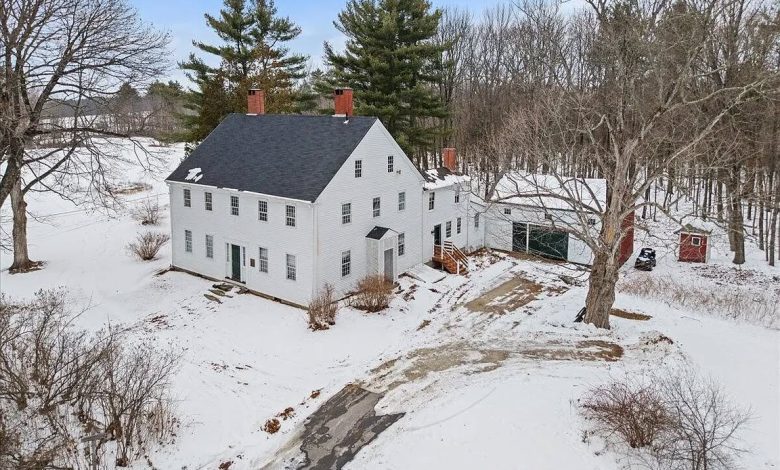
A Living Legacy on 124 Acres
A Living Legacy on 124 Acres: The Historic Parson Smith Homestead

Welcome to the Parson Smith Homestead, an extraordinary and historically preserved residence dating back to 1764, gracefully set upon 124 acres of pristine hayfields, protected forestland, and scenic river frontage. This remarkable property is far more than a home—it is a living testament to early American craftsmanship, architectural evolution, and rural heritage. Once operated as a house museum, the residence stands today as a textbook example of colonial architecture, offering a rare opportunity to own a tangible piece of 18th-century history while enjoying the thoughtful integration of modern amenities.

From the moment you approach the homestead along the storied stretch of River Road in Windham’s Historic Corridor, you sense the significance of the land beneath your feet. The setting is timeless. Mature trees frame the long drive, and expansive fields stretch outward in quiet dignity. The home itself rises with classic symmetry and proportion, reflecting the architectural sensibilities of its original era while showcasing layers of design influences that were added over generations. This is not simply a preserved structure—it is a chronological narrative written in timber, brick, and hand-forged hardware.

Inside, the Parson Smith Homestead reveals a carefully maintained interior that was finished in stages, illustrating four distinct architectural periods: Georgian, Federal, Greek Revival, and Victorian. Each room serves as a chapter in the story of American design. The Georgian influence is evident in the home’s balanced layout and formal proportions, characterized by refined woodwork and elegant fireplace mantels. Moving forward in time, the Federal period introduces delicate ornamentation and lighter stylistic details, subtly shifting the atmosphere while maintaining historical continuity.

The Greek Revival additions bring classical motifs and clean, structured lines that reflect early 19th-century America’s admiration for ancient Greek ideals. Finally, the Victorian touches introduce warmth, embellishment, and intricate craftsmanship that add richness and texture to the living spaces. Few properties in the country offer such a clear, physical representation of architectural evolution under one roof. For historians, preservationists, or simply lovers of fine craftsmanship, this layered authenticity is priceless.

At the heart of the home, a grand staircase commands attention. Its stately rise is flanked by formal parlors, each designed for entertaining and gathering, much as they were centuries ago. These gracious rooms echo with history, having once welcomed prominent members of the family who cultivated the surrounding farmland. The original hearth kitchen stands as a powerful reminder of early American domestic life. Wide-planked floors, worn smooth by generations of footsteps, guide you from room to room, while substantial fireplaces—once the primary source of warmth—offer a sense of intimacy and permanence that modern construction rarely achieves.

The attic and basement are equally compelling. Massive hand-hewn timbers, shaped by skilled craftsmen long before the advent of industrial milling, form the structural backbone of the home. The exposed beams display the marks of early tools, each notch and groove telling its own quiet story. Below, arched brickwork in the basement reflects both functional engineering and aesthetic beauty, underscoring the pride that early builders took in their work. These spaces are not merely utilitarian—they are architectural treasures in their own right.

Despite its deep historical roots, the Parson Smith Homestead has been thoughtfully updated to accommodate contemporary living. Over the years, modern comforts have been seamlessly integrated, ensuring that today’s homeowners can enjoy the property without sacrificing convenience. A modern kitchen offers updated appliances and practical functionality, blending harmoniously with the surrounding historic aesthetic. Updated bathrooms, electrical systems, and a forced hot water boiler provide efficiency and comfort while respecting the integrity of the original structure. The result is a rare balance between preservation and practicality.

Beyond the main residence, additional structures enhance both the functionality and charm of the estate. A carriage house stands nearby, offering flexible space that can serve a variety of purposes, from storage to studio or workshop use. Even more remarkable is the detached barn dating from 1810–1820. This historic structure was salvaged from another Windham site, carefully labeled, disassembled, relocated, and lovingly reassembled on the property. Its beams and framework reflect early 19th-century agricultural craftsmanship, and it stands today as both a functional outbuilding and a preserved artifact of rural history.
The land itself is a defining feature of the property. Three expansive open fields are currently managed and hayed by a local dairy farm, maintaining the agricultural tradition that has shaped this landscape for centuries. These fields not only generate practical use but also preserve sweeping pastoral views that change beautifully with the seasons. In spring and summer, vibrant green grasses ripple under open skies; in autumn, golden tones blanket the landscape; and in winter, snow transforms the acreage into a serene, undisturbed canvas.
At the edges of the fields, mature maple trees stand tapped for syrup production, a quiet nod to New England’s enduring traditions. Nearby, a local beekeeper cultivates queen bees in colorful hive boxes, adding life, movement, and ecological harmony to the land. The forested portion of the property is held in tree-growth protection, ensuring sustainable stewardship and preserving the natural character of the woodland for generations to come. Walking through these woods, you encounter a peaceful environment rich with wildlife and native plant species.
On the river side of the estate, the land gently descends toward frontage along the Presumpscot River. The water’s edge offers opportunities for quiet reflection, wildlife observation, or simple enjoyment of the natural setting. The property also surrounds the historic Smith-Anderson cemetery, owned by the town of Windham and accessed by deeded easement. This small, preserved burial ground serves as a poignant reminder of the families who once called this land home, adding depth and historical continuity to the estate’s story.
Outdoor enthusiasts will appreciate the existing private trails that wind throughout the acreage, ideal for walking, snowshoeing, or exploring nature year-round. In addition, the Mountain Division Trail system is slated to expand along the nearby railbed, further enhancing recreational opportunities and connectivity while maintaining the area’s scenic charm.
Location is yet another compelling advantage. The homestead is situated along Windham’s Historic Corridor on River Road, an area known for its collection of grand homes and significant properties. Despite its serene rural character, the location offers convenient access to the Lakes Region for boating, fishing, and outdoor recreation, as well as easy commuting to the nearby cities of Westbrook and Portland. This blend of privacy, acreage, and accessibility is increasingly rare in today’s market.
Owning the Parson Smith Homestead is not simply a real estate transaction—it is the stewardship of a legacy. It is an opportunity to inhabit a space where generations have lived, worked, celebrated, and persevered. It is a property that invites exploration, reflection, and appreciation for the artistry of early American builders. Whether you envision it as a private residence, a legacy estate, or a continuation of its educational heritage, the possibilities are as expansive as the 124 acres that surround it.
Come visit, explore its fields and forests, stand by the fireplaces that once warmed colonial gatherings, and experience the profound sense of connection that only a home of this caliber can provide. Fall in love not only with a house, but with a story that continues to unfold—your story—within the enduring walls of the Parson Smith Homestead.


Listed on Zillow