Nearly 50 Acres in Coventry, Vermont, With Two Cabins, Wetlands and Seasonal Road Access
47.4 Acres in Vermont With Two Off-Grid Camps and a Beaver Pond Listed for $120,000
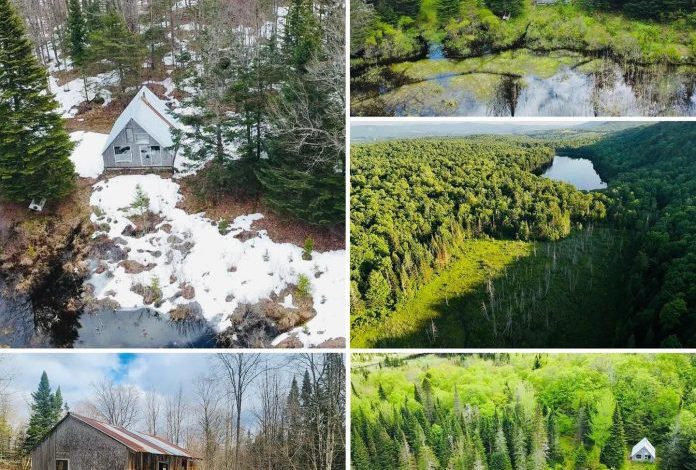
A secluded property in Vermont’s Northeast Kingdom offers nearly 50 acres of wooded land, two existing camp structures, and a landscape featuring wetlands, a beaver pond, and an elevated hardwood-covered hill. Located at 805 and 949 Cobblestone Trail in Coventry, Vermont, the property is listed for $120,000 and may appeal to buyers seeking a remote recreational retreat or a long-term land ownership opportunity.
The 47.40-acre parcel includes two camps, one of which is described as an A-frame structure requiring major renovation. The property is reported to be entirely off-grid, without public electricity, a drilled well, or an installed septic system. Access is also seasonal, with a locked gate and limitations on conventional vehicle access during parts of the year.
These characteristics make the property different from a conventional rural home listing. While the acreage and natural features may attract outdoor enthusiasts and experienced renovators, prospective buyers will need to carefully investigate access rights, building conditions, wetlands, utility installation costs, and the feasibility of their intended uses.
Property Overview: 805 and 949 Cobblestone Trail
The property is located in Coventry, within Orleans County in northeastern Vermont. The supplied listing information describes a largely wooded landscape with varied terrain and two existing camp structures.
Key details include:
- Asking price: $120,000
- Total acreage: 47.40 acres
- Location: 805 and 949 Cobblestone Trail, Coventry, VT 05825
- Structures: Two camps, including an A-frame
- Utilities: Reportedly off-grid, with no public electricity, drilled well, or installed septic system
- Road access: Seasonal private road with a locked gate
- Natural features: Beaver pond, wetlands, woodland, and an elevated hardwood hill
- Reported hardwood acreage: More than 10 acres on the elevated hill
- Current Use status: Reportedly not enrolled in Vermont’s Use Value Appraisal program
- Reported listing date: July 19, 2026
At the asking price, the property works out to approximately $2,532 per acre. This is a simple calculation based on the full purchase price divided by the reported acreage; it does not establish the market value of the land or the contribution of the existing structures.
Two Existing Camps Offer a Starting Point for Restoration
One of the property’s distinguishing features is that it includes two existing camp structures rather than vacant land alone. Their condition, legal status, and potential for restoration will be central to determining whether the asking price represents an appropriate purchase for a particular buyer.
The camp identified at 949 Cobblestone Trail is described as an A-frame requiring major renovation. The other camp at 805 Cobblestone Trail is also reported to need substantial work.
Before developing a renovation plan, buyers should have both structures inspected for foundation problems, deteriorated framing, roof damage, water intrusion, and other safety concerns. The cost of restoring an existing building can vary significantly depending on whether the original structure can be retained or whether substantial rebuilding is necessary.
The listing’s description of the buildings should not be treated as confirmation that either structure is safe for occupancy or eligible for renovation under current requirements. Buyers should verify applicable permits, prior approvals, and the legal status of the existing camps before committing funds.
A Beaver Pond, Wetlands, and Hardwood Forest
The land combines several natural features that may appeal to buyers who value wildlife habitat and a secluded outdoor setting.
A beaver pond and surrounding wetlands form part of the landscape, while wooded areas and an elevated hardwood hill provide a contrasting terrain profile. The supplied information describes more than 10 acres of elevated hardwood forest, with trees including sugar maple, yellow birch, and American beech.
These wooded areas may be of interest to people considering long-term forest management, nature observation, or recreational use. However, timber value cannot be determined from tree species and acreage alone. A consulting forester would need to evaluate tree size, quality, species mix, access, harvestability, and local market conditions before estimating potential revenue.
The property is also described as having potential for maple sugaring. Whether a small operation would be practical depends on the number and condition of suitable trees, access to equipment, the availability of appropriate facilities, and the owner’s intended scale of production.
The beaver pond and wetlands add ecological interest, but they may also limit where buildings, driveways, wastewater systems, and other improvements can be located. A wetland delineation and review of relevant state and local requirements would be important before planning any new development.
Seasonal Road Access Is a Major Consideration
Access is one of the most important practical factors associated with this property. According to the supplied listing information, Cobblestone Trail is a seasonal private road with a locked gate.
Conventional vehicle access may be possible during suitable conditions, but the road is described as difficult or unavailable to cars during winter and spring mud season. Snowmobiles, tracked utility vehicles, or travel on foot may be necessary during certain periods.
This arrangement could suit a buyer who wants a remote recreational camp and is prepared to plan trips around seasonal conditions. It may be considerably less convenient for someone who expects year-round access, frequent deliveries, or regular contractor visits.
The road conditions also affect renovation planning. Transporting building materials, solar equipment, water-storage tanks, or heavy machinery could be more complicated and expensive than at a property with maintained year-round road access.
Before purchasing, buyers should establish:
- Whether legal access is documented in the deed or recorded easements.
- Who owns and maintains the private road.
- Whether there are road maintenance agreements or shared costs.
- Which vehicles can reach the camps during different seasons.
- Whether emergency services and contractors can access the property.
- Whether any portion of the route follows a designated recreational trail.
The existence of a locked gate may help limit casual entry, but it does not independently establish the buyer’s access rights or the security of the entire property.
Off-Grid Utilities and Infrastructure
The camps are reported to lack public electricity, a drilled well, and an installed septic system. Buyers therefore need to evaluate the costs and feasibility of establishing the infrastructure required for their intended use.
Solar Electricity
A solar system with battery storage could be one option for supplying electricity. A generator might provide backup power during extended periods of limited sunlight or higher demand.
The appropriate system size would depend on the appliances, lighting, heating arrangements, seasonal occupancy, and other electrical loads. The supplied estimate of $6,500 to $12,000 for a solar array and battery bank is preliminary and should not be treated as a contractor quote. Equipment, installation, transportation, and site conditions could materially change the final cost.
Water Supply
Rainwater collection and storage may be useful for certain non-potable purposes, but drinking water requires an appropriate treatment and testing plan.
A drilled well is another possible option, although the cost and feasibility of drilling depend on geology, depth, access for drilling equipment, and local requirements. The supplied estimate of $8,000 to $14,000 is only a planning figure, not a guarantee of a successful well at that price.
Before relying on either option, buyers should investigate the site’s water resources, applicable permitting requirements, and practical access for installation and maintenance.
Wastewater and Toilets
The property reportedly does not have an installed septic system. That creates an important constraint for anyone planning regular overnight occupancy or future rental use.
Composting toilets may be worth investigating, but they do not automatically eliminate all wastewater or permitting requirements. Greywater and other waste streams must also be handled in compliance with applicable regulations.
A conventional or engineered septic system could be possible if the soil and site conditions support it. However, wetlands, slope, setbacks, and the location of the existing structures may limit suitable installation areas. A qualified wastewater designer and appropriate site evaluation should establish feasibility before a buyer relies on a particular system.
Understanding the $120,000 Asking Price
At $120,000 for 47.40 acres, the property has a calculated asking price of approximately $2,532 per acre, including both camps and the existing site features.
The supplied analysis compares this figure with other land listings in the Orleans County area, including parcels with different acreage, road access, terrain, and utility availability. Those comparisons may provide context, but asking prices alone do not establish what similar properties ultimately sell for.
The property’s seasonal access, off-grid status, wetlands, and renovation requirements are important differences that could influence its marketability and development costs. Two parcels with similar acreage may have very different practical values if one has maintained road access and usable building sites while the other requires substantial infrastructure work.
The supplied estimate that the existing camp footprints and cleared areas contribute $15,000 to $25,000 in site-development value has not been independently established. Buyers should not treat that amount as a verified asset valuation without supporting estimates and a property-specific assessment.
A thorough financial evaluation should consider the purchase price alongside likely inspection costs, road maintenance, structural work, utility installation, permitting, insurance, taxes, and ongoing forest management.
Vermont’s Current Use Program: An Opportunity to Investigate
The supplied listing information states that the property is not currently enrolled in Vermont’s Use Value Appraisal program, commonly known as Current Use.
Vermont’s program can provide qualifying agricultural and forestland with property-tax treatment based on use value rather than full fair market value. However, enrollment is subject to program requirements, and not every acre or improvement necessarily qualifies.
The property’s reported acreage may make it worth investigating eligibility, particularly for forestland management. Buyers should not assume that all 47.40 acres qualify, that enrollment will be approved, or that a particular tax reduction will result.
Before making financial projections, prospective owners should contact the relevant Vermont program administrators and local officials to confirm:
- Which portions of the parcel could qualify.
- The applicable minimum acreage and management requirements.
- Whether a qualifying forest management plan is needed.
- How the camps, cleared areas, wetlands, and other land features would be treated.
- Any ongoing obligations, penalties, or withdrawal consequences.
- The likely tax impact based on the property’s actual assessment and eligibility.
The supplied annual tax projections of $2,200 to $2,800 before enrollment and $750 to $1,100 afterward are estimates, not verified tax bills. Actual costs would depend on the property’s assessment, local tax rates, eligibility, and the amount of land accepted into the program.
Potential Uses for the Property
The property may appeal to several types of buyers, but each intended use comes with different practical and regulatory considerations.
A private recreational camp: A buyer primarily interested in seasonal hunting, hiking, wildlife observation, or outdoor recreation may be able to focus on stabilizing one existing camp and establishing basic services appropriate for permitted occupancy. Safe access, the condition of the structures, and wastewater arrangements remain essential.
An off-grid retreat: Solar power, water storage, and suitable sanitation could support a remote getaway if the site and regulatory requirements permit. The cost of making the structures safe and functional should be established before a renovation budget is finalized.
Forest management: The hardwood hill may be worth evaluating with a consulting forester. A professional assessment would help determine whether selective harvesting or other management activities are suitable, taking account of access, tree quality, environmental constraints, and the owner’s objectives.
Long-term land ownership: Buyers interested in holding rural land may appreciate the acreage and natural features. Nevertheless, future appreciation is uncertain, and carrying costs, access limitations, and restrictions on usable land could affect resale prospects.
Short-term rental accommodation: The A-frame may attract interest as a possible future rental cabin, but rental income should not be assumed. The structure would need to be restored to an appropriate standard, utilities and wastewater would need to meet applicable requirements, and buyers would need to verify local rules, insurance, and market demand.
The supplied projection of $175 to $275 per night and 45% to 55% occupancy is not a verified forecast for this particular property. Those assumptions would imply a wide range of gross revenue, but gross bookings are not profit and do not account for construction costs, cleaning, maintenance, management, taxes, utilities, insurance, or seasonal road limitations.
Renovation and Infrastructure Budget
The supplied estimates identify several possible costs associated with making the camps usable. These figures can serve as an initial checklist, but they should be confirmed with contractors familiar with remote Vermont properties.
| Project component | Supplied estimate |
|---|---|
| Structural rehabilitation | $15,000–$35,000 |
| Solar and battery system | $6,500–$12,000 |
| Rainwater collection and storage | $2,500–$5,000 |
| Drilled well, if feasible | $8,000–$14,000 |
| Composting toilet system | $1,400–$2,800 |
| Engineered septic system, if feasible | $12,000–$22,000 |
These are alternative or overlapping system options, not a single complete project budget. For example, the costs of a rainwater system and a drilled well represent different approaches to water supply, while a composting toilet and an engineered septic system represent different sanitation approaches.
The estimates may also exclude road repairs, site preparation, equipment transport, professional design, permits, environmental review, and hidden structural damage. Buyers should obtain a detailed scope of work and determine which options are legally and technically feasible before combining these numbers into a total investment estimate.
Essential Due Diligence Before Closing
Remote, off-grid land requires more investigation than a typical residential property. Before proceeding, buyers should prioritize the following checks:
- Boundary and acreage verification: Review the deed and survey, confirm property corners, and identify any discrepancies in the reported acreage.
- Legal road access: Obtain documentation of access rights, easements, gate arrangements, and road maintenance responsibilities.
- Structural inspections: Have both camps evaluated for foundation stability, framing, roof condition, moisture damage, and safe occupancy.
- Wetland assessment: Determine the location and extent of wetlands and identify restrictions that could affect construction, driveways, or wastewater systems.
- Utility feasibility: Consult qualified professionals about solar power, water supply, and wastewater options before assuming the site can support regular occupancy.
- Current Use eligibility: Confirm program rules, eligible acreage, management plan requirements, tax implications, and potential withdrawal penalties.
- Forest assessment: Consult a Vermont forester before assigning value to timber or estimating future harvest revenue.
- Insurance and taxes: Obtain property-specific insurance information and verify the current tax bill and assessment.
- Rental and land-use rules: Check local requirements before planning short-term rentals, additional cabins, or commercial recreational activities.
- Full project budgeting: Obtain written estimates and include a contingency for access-related costs and unexpected repairs.
Final Thoughts on the Coventry, Vermont, Property
Listed for $120,000, 805 and 949 Cobblestone Trail offers 47.40 acres of wooded Vermont land featuring two existing camps, a beaver pond, wetlands, and an elevated hardwood hill. Its remote setting may appeal to buyers who prioritize outdoor recreation, privacy, and the possibility of restoring an off-grid retreat.
The property also comes with substantial limitations. Seasonal private-road access, the absence of installed utility systems, and the reported need for major structural work could make the project costly and logistically demanding. Wetlands and terrain may further restrict where improvements can be made.
For experienced buyers prepared to investigate the land carefully and manage a long-term project, the property could merit further consideration. Its suitability and financial prospects, however, depend on verified access rights, structural condition, permitted uses, infrastructure feasibility, and the actual cost of ownership.
This article is based on the supplied property information. Listing details, comparable-market figures, tax estimates, program eligibility, renovation budgets, and potential rental revenue have not been independently verified. Buyers should consult qualified local professionals and relevant authorities before making a purchase decision.


Listed on Zillow