
35-Acre West Virginia Farm Listed for $175,000 After a $75,000 Price Reduction
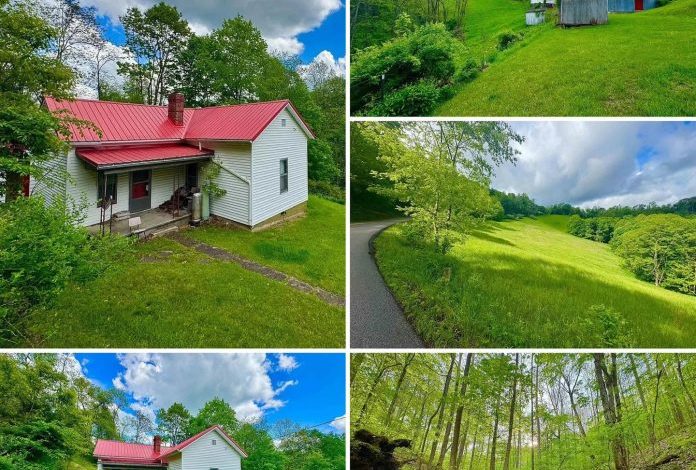
A rural property with open pasture, mature hardwood timber, a year-round creek, and several existing farm buildings can offer a range of possibilities for buyers seeking a country home or recreational retreat. At 14451 Proctor Creek Road in New Martinsville, West Virginia, a 35-acre property combines those features with a modest farmhouse dating to 1915.
The property is listed for $175,000, following a reported total price reduction of $75,000 from its original asking price of $250,000 in May 2025. The land includes approximately eight acres of cleared, fenced pasture and 27 acres of wooded hillside, with a spring-fed creek running through the lower terrain.
The existing improvements include an approximately 800-square-foot farmhouse with two bedrooms and one bathroom, a detached garage, a barn, and an additional storage shed. The listing also reports paved county road access, 200-amp electrical service, a septic system, and private water.
However, the buildings are being sold as-is, and the mineral rights are excluded from the sale. Buyers will need to assess the home’s condition, verify the utility systems, and understand the implications of the mineral rights reservation before deciding whether the property suits their plans.
Property Overview: A Farm With Pasture, Timber, and Outbuildings
The property combines residential improvements with a mixture of open land and mature woodland. This arrangement may appeal to buyers who want room for gardening, small-scale farming, outdoor recreation, or hunting.
The supplied listing details include:
- Asking price: $175,000
- Address: 14451 Proctor Creek Road, New Martinsville, WV 26155
- County: Wetzel County
- Total acreage: Approximately 35 acres
- House: Approximately 800 square feet
- Bedrooms: 2
- Bathrooms: 1
- Year built: 1915
- Pasture: Approximately 8 acres, described as fenced
- Woodland: Approximately 27 acres of mature hardwood timber
- Water feature: Spring-fed creek
- Garage: Approximately 24 by 20 feet
- Barn: Approximately 25 by 20 feet
- Additional structure: Storage shed
- Electrical service: Reported 200-amp service
- Water and wastewater: Private water and septic system
- Heating: Wood-burning stove and coal, as described in the supplied information
- Annual property taxes: Reported at approximately $426 to $476
- Sale condition: All structures sold as-is
- Mineral rights: Excluded from the sale
The listed figures provide a starting point for evaluating the property, but buyers should confirm the acreage, building measurements, current taxes, and condition of the improvements before proceeding.
A 1915 Farmhouse With a Simple Rural Layout
The farmhouse reportedly contains 800 square feet, with two bedrooms and one bathroom. Its single-level layout may appeal to buyers looking for a compact residence that does not require as much interior space to maintain as a larger house.
The listing describes a kitchen of approximately 180 square feet and a living room of around 144 square feet. A wood-burning stove is identified as a central feature of the living area.
For someone interested in a rural homestead, the house could provide a base for managing the surrounding land, storing equipment in the outbuildings, and spending time outdoors. Its modest size may also make some interior improvements more manageable than renovating a much larger residence.
Nevertheless, the property dates to 1915 and is being sold as-is. Buyers should not assume that the home is ready for immediate occupancy or that its existing systems meet current standards. A professional inspection should cover the foundation, roof, floor joists, plumbing, electrical system, insulation, and evidence of moisture or pest damage.
The house’s actual condition will determine whether the project involves relatively minor improvements or more extensive repairs.
Eight Acres of Pasture for Rural Living
Approximately eight acres are described as cleared pasture with perimeter fencing. This open ground is one of the property’s principal features for buyers considering small-scale agricultural activities.
Depending on soil quality, drainage, fencing condition, and local requirements, the pasture could potentially accommodate gardening, hay production, or certain livestock uses. It may also provide open space for outdoor activities and equipment storage.
The listing describes electric fencing, but buyers should inspect the posts, wire, gates, energizer, and power supply to determine whether the enclosure is functional. Existing fencing can reduce the amount of new work required, but repairs or replacement may still be necessary.
Anyone planning to keep horses, cattle, or other livestock should assess pasture quality, available shelter, water access, and the cost of ongoing maintenance. The suitability of the land for any particular agricultural use should be established rather than assumed from the acreage alone.
Twenty-Seven Acres of Mature Hardwood Timber
The remaining approximately 27 acres are described as mature hardwood woodland rising along the surrounding hillside. This part of the property offers a different environment from the open pasture, with potential habitat for wildlife and space for outdoor recreation.
Depending on the terrain and existing access, the wooded acreage could support hiking, wildlife observation, hunting where legally permitted, or recreational trails. The trees may also have potential timber value, but that value cannot be established from a general description alone.
Buyers interested in harvesting timber should consult a qualified forester who can assess the tree species, quality, volume, accessibility, and applicable harvesting rules. A wooded parcel should not be assigned a specific timber value without a proper evaluation.
The sloping terrain also deserves attention. Buyers should examine drainage, erosion, access to the upper acreage, and whether existing paths or trails can be used safely throughout the year.
A Spring-Fed Creek Runs Through the Property
A year-round, spring-fed creek is another notable feature. The waterway reportedly follows the lower portion of the land, adding natural scenery and potentially providing a water source for wildlife.
The creek may contribute to the property’s appeal for buyers who enjoy a rural setting with water nearby. However, its presence does not establish that the water is suitable for drinking, livestock, irrigation, or any other specific use.
Anyone considering the creek as part of a water-supply plan should obtain appropriate testing and investigate any necessary permissions. Buyers should also check for flood risk, erosion, drainage concerns, and restrictions affecting work near the waterway.
The location of the creek relative to property boundaries should be confirmed through the deed and survey information. Water-related rights and the permitted uses of the stream should not be assumed.
Garage, Barn, and Storage Shed
In addition to the farmhouse, the property includes several outbuildings that could be useful for rural living.
The detached garage measures approximately 24 by 20 feet, giving it a reported footprint of 480 square feet. Depending on its condition and layout, it could provide space for a vehicle, tools, lawn equipment, or farm supplies.
The barn reportedly measures 25 by 20 feet, or approximately 500 square feet. Its potential uses could include storage, equipment protection, or livestock shelter if the structure is suitable and the intended use is permitted.
A separate storage shed provides additional space for smaller tools and supplies.
All buildings are reportedly being sold as-is. Buyers should inspect each structure’s roof, framing, foundation, doors, drainage, and any electrical installations. They should also verify the permitted status and actual usable condition of the outbuildings before assigning them a financial value.
Utilities, Access, and Heating
The supplied listing describes paved county road access, a 200-amp electrical service, private water, and an existing septic system. These features may be useful to a buyer planning to renovate the farmhouse or use the property as a rural base.
However, the presence of existing utilities does not guarantee that they are functioning correctly.
Electrical service: An electrician should inspect the panel, wiring, grounding, and service condition. Buyers should confirm that the reported 200-amp service is active and suitable for their intended improvements.
Private water: The listing refers to private water, described in the supplied details as a well or spring source. Buyers should establish the exact source, inspect the pump and pressure equipment, and arrange water-quality testing.
Septic system: A qualified professional should evaluate the septic tank and associated disposal system, including its condition and suitability for the intended occupancy.
Heating: The home is described as using a wood-burning stove and coal, without central cooling. Buyers should confirm the actual heating equipment and have any stove, chimney, flue, and ventilation system inspected before use.
Road access: The property is described as having paved county road access. Buyers should confirm the legal access arrangements, driveway condition, and any maintenance obligations.
The actual cost of bringing the home up to the buyer’s preferred standard will depend on the results of these inspections and the scope of the planned work.
Understanding the $175,000 Asking Price
At the current reported asking price of $175,000, the property works out to $5,000 per acre, based on 35 acres. Dividing the asking price by the farmhouse’s reported 800 square feet produces approximately $219 per square foot, but this calculation is not a meaningful standalone measure of the value of the entire property.
The purchase includes land, a farmhouse, a garage, a barn, a shed, and existing utility infrastructure. The value of each component depends on its condition, usability, legal status, and the local market.
The supplied material includes an estimated asset-allocation table assigning values to the pasture, woodland, utilities, buildings, and farmhouse. Those figures should be treated as illustrative estimates rather than independently verified market values. A buyer should not assume that the components could be sold separately for the amounts shown.
The reported annual property taxes range from $426 to $476, equivalent to approximately $36 to $40 per month when averaged across a year. Buyers should confirm the latest tax bill and determine whether any reassessment or other change may affect future costs.
The total financial commitment will also include inspections, insurance, maintenance, repairs, and any planned renovations.
Price History: A Reported $75,000 Reduction
The supplied listing history indicates that the property was first offered for $250,000 in May 2025. It was reportedly reduced to $200,000 in April 2026 and then to $175,000 on August 16, 2026.
That represents a cumulative reduction of $75,000, or 30% from the original asking price. The latest $25,000 reduction represents a further 12.5% decrease from the previous $200,000 price.
The revised asking price may prompt renewed interest from buyers who were previously deterred by the cost. However, a reduction does not by itself establish that the property is now fairly priced or that it offers a particular return on investment.
A more reliable assessment would compare the property with recent sales of farms and rural acreage that have similar road access, terrain, utility infrastructure, outbuildings, and residential condition. The mineral rights exclusion and the costs of any required repairs should also be considered.
What the Mineral Rights Exclusion Means
An important detail in the supplied listing is that the mineral rights do not convey with the sale.
Buyers should review the deed and title records to determine exactly which rights are reserved, who owns them, and whether any existing agreements or easements affect the property. Depending on the legal documents and local circumstances, severed mineral rights may have implications for surface use or future activity.
Prospective owners should not assume they will own the oil, gas, or other mineral rights associated with the acreage simply because they purchase the surface property.
A title professional or real estate attorney familiar with West Virginia property law can help explain the relevant documents and identify any recorded interests that may affect the buyer.
Potential Advantages and Challenges
Potential advantages
- Approximately 35 acres combining open pasture and mature woodland.
- A spring-fed creek along the lower terrain.
- Existing farmhouse with two bedrooms and one bathroom.
- Detached garage, barn, and storage shed.
- Reported paved road access and 200-amp electrical service.
- Private water and an existing septic system, subject to inspection.
- Reported annual property taxes below $500.
- A $75,000 reduction from the original asking price.
Important challenges
- All structures are sold as-is.
- The condition and functionality of the home’s systems require verification.
- The older farmhouse may need substantial repairs or modernization.
- The mineral rights are excluded.
- The pasture fencing, barn, garage, and shed may require maintenance.
- Creek conditions, drainage, and flood exposure should be investigated.
- The value of the timber and individual property components has not been independently established.
These factors should be weighed against the buyer’s budget, intended use, and ability to maintain rural land and older buildings.
Who Might Consider This West Virginia Farm?
The property may interest buyers looking for a small farm, recreational acreage, a hunting retreat, or a rural homestead with existing outbuildings. The combination of pasture and woodland offers different possibilities for land use, while the farmhouse provides an existing residential structure to evaluate for renovation.
Hobby farmers may appreciate the open ground and barn, while outdoor enthusiasts may value the wooded acreage and creek. Buyers interested primarily in timber should obtain a professional forestry assessment before including potential harvesting income in their calculations.
The property may be less suitable for someone seeking a modern, move-in-ready house or a low-maintenance suburban lifestyle. An older farmhouse, several outbuildings, and 35 acres of land all require ongoing attention, and renovation costs can be difficult to predict until inspections are complete.
Essential Due Diligence Before Buying
Before making an offer, prospective buyers should:
- Inspect the farmhouse: Assess the roof, foundation, crawlspace, floor joists, plumbing, electrical system, and heating equipment.
- Test the water: Establish the exact source and arrange appropriate water-quality testing.
- Inspect the septic system: Confirm its condition, capacity, and suitability for the intended use.
- Review the title and mineral rights: Understand the reservation, any recorded easements, and potential implications for surface use.
- Confirm boundaries and acreage: Review surveys, parcel records, road frontage, and the location of the creek.
- Assess the outbuildings: Inspect the garage, barn, and shed for structural problems and verify their permitted status where applicable.
- Evaluate the land: Check pasture condition, fencing, drainage, timber characteristics, and access to the wooded hillside.
- Build a realistic budget: Include repairs, maintenance, insurance, taxes, and a contingency for unexpected costs.
These steps can help distinguish the property’s existing assets from improvements that may require additional investment.
Final Thoughts on the 35-Acre Proctor Creek Farm
Listed for $175,000, the property at 14451 Proctor Creek Road combines 35 acres of West Virginia countryside with a 1915 farmhouse, approximately eight acres of pasture, 27 acres of mature woodland, a spring-fed creek, and several outbuildings.
Its mix of open and wooded land may appeal to buyers who want room for rural activities, recreation, or a small-scale homestead. The reported price reduction may also encourage prospective buyers to take a closer look.
However, the property should not be evaluated on acreage and asking price alone. The condition of the house, functionality of the utilities, state of the outbuildings, legal details of the mineral rights exclusion, and actual usability of the land will all affect its suitability and total cost.
For buyers prepared to investigate those issues and manage the responsibilities of an older rural property, it may be worth considering. A professional inspection, title review, and comparison with relevant local sales are essential before deciding whether the asking price makes sense.
This article is for informational purposes only. Property details and listing history are based on the supplied material and have not been independently verified. This is not an appraisal, inspection report, or financial recommendation.


Listed on Zillow


