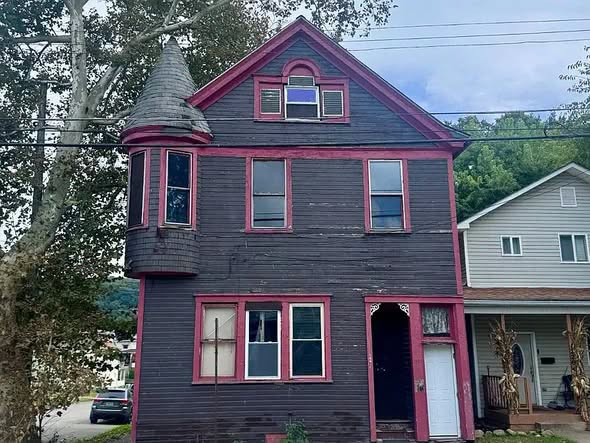
Historic Duplex in Beaver Falls, Pennsylvania – Two Spacious 3-Bedroom Apartments With Original Woodwork and Rental Investment Potential
Discover a Historic Two-Unit Investment Property at 1228 5th Ave, Beaver Falls, PA 15010
Real estate investors searching for affordable multifamily properties in Pennsylvania may want to take a closer look at 1228 5th Ave in Beaver Falls. This historic duplex, originally constructed in 1910, offers an opportunity to explore residential rental ownership in an established community within Beaver County.
Featuring two separate apartments, preserved architectural details, spacious interiors, and separately described utility systems, the property combines traditional residential character with potential income-producing possibilities.
The seller’s description identifies two three-bedroom, one-bathroom apartments, offering a total of six described bedrooms across the building. The upper-level apartment also includes a large finished third-floor area that may be suitable for additional flexible space, subject to applicable occupancy and building requirements.
One of the most distinctive aspects of this property is its preserved original woodwork. Classic pocket doors, high ceilings, vintage transom windows, and original wood trim contribute to an architectural style that can be difficult to replicate in modern construction.
With approximately 1,968 square feet of reported above-ground finished area and a 2,613-square-foot lot, this property could appeal to investors interested in rental housing, historic renovations, or long-term residential ownership.
Another important feature is the presence of separate utility equipment, including two furnaces and two hot water tanks, according to the property description.
Separate systems can sometimes simplify utility management for multifamily properties, although the actual utility connections and billing arrangements should be independently verified.
The listing also describes relatively modest annual property taxes, an important consideration for investors evaluating potential net operating income.
However, this property is advertised under auction conditions. Prospective buyers should understand the auction rules, bidding requirements, property condition, and financial obligations before participating.
This detailed property guide examines the building’s architecture, residential layout, investment considerations, potential renovation strategies, and the important financial questions buyers should investigate.
Property Overview – 1228 5th Ave, Beaver Falls, Pennsylvania
Located in Beaver Falls, Pennsylvania, this property is classified as a multifamily residence and was originally constructed in 1910.
The following information summarizes the supplied listing details.
| Property Feature | Listing Information |
|---|---|
| Address | 1228 5th Ave, Beaver Falls, PA |
| Property Type | Multifamily / Duplex |
| Year Built | 1910 |
| Finished Area | 1,968 Sq. Ft. |
| Lot Size | 2,613 Sq. Ft. |
| Described Layout | Two 3-Bedroom Apartments |
| Bathrooms | 2 Full Bathrooms |
| Third Floor | Finished Bonus Area |
| Heating | Two Furnaces Described |
| Water Heating | Two Hot Water Tanks Described |
| Architectural Features | Original Woodwork, Pocket Doors, Transom Windows |
| HOA | None Reported |
| Tax-Assessed Value | $74,900 |
| Annual Taxes | $1,535–$1,586 Reported |
| Sale Conditions | Absolute Auction / Auction |
| MLS Number | 12024378 |
| Original Construction | 1910 |
The listing’s structured facts identify three bedrooms, while the property description identifies two three-bedroom units. Buyers should verify the legally recognized bedroom count, permitted unit configuration, and total finished area.
The asking price or current auction bid has not been supplied. Therefore, the property’s affordability and potential return on investment cannot be established from the available information alone.
Two Separate Apartments With Rental Income Potential
One of the primary attractions of this Beaver Falls property is its described two-unit residential layout.
According to the listing narrative, the building contains a first-floor apartment and an upper-level apartment.
Each apartment is described as having three bedrooms and one bathroom.
For a multifamily investor, a three-bedroom rental unit may appeal to a variety of potential tenants, including households seeking more space than a conventional one-bedroom apartment provides.
Larger apartment layouts can offer flexibility for home offices, guest rooms, and everyday living arrangements.
However, rental demand depends on local market conditions, property quality, neighborhood characteristics, and pricing.
The building’s two-unit arrangement may allow an owner to receive rental income from separate households, provided both apartments are legally recognized and approved for occupancy.
Potential rental revenue should be estimated using comparable properties in the Beaver Falls market rather than relying on general assumptions about Pennsylvania rental prices.
Before purchasing, investors should confirm whether both units are currently occupied, whether any leases exist, and whether rental registrations or inspections are required.
First-Floor Apartment – Traditional Layout and Spacious Rooms
The first-floor apartment is described as a three-bedroom, one-bathroom unit.
The property overview emphasizes oversized rooms and high ceilings, suggesting that the interior may offer a sense of spaciousness beyond what the building’s exterior dimensions might initially indicate.
Older homes often feature room proportions and architectural elements that differ from contemporary apartment designs.
High ceilings can contribute to a more open interior atmosphere.
Original wood trim may also provide decorative character around windows, doors, and interior openings.
For an investor considering renovation, retaining these features could help preserve the property’s historic appearance.
However, the exact condition of the first-floor apartment is not fully documented in the supplied information.
Prospective buyers should inspect the kitchen, bathroom, flooring, walls, windows, electrical system, plumbing, and heating equipment.
A complete inspection can help determine whether the apartment requires cosmetic updates, major repairs, or improvements necessary for safe occupancy.
Upper-Level Apartment With a Finished Third Floor
The upper-level apartment is another interesting component of this multifamily property.
According to the seller’s description, this unit includes three bedrooms, one bathroom, and access to a large finished third-floor area.
The third-floor space may provide additional flexibility for a future occupant.
Possible uses could include a home office, hobby room, recreation area, or storage, depending on its condition and applicable building regulations.
The listing suggests the area could potentially serve as an additional bedroom.
However, a finished room is not automatically a legally compliant bedroom.
Bedroom classification may depend on ceiling height, emergency escape and rescue openings, ventilation, heating, access, and local occupancy requirements.
Buyers should verify whether the third floor is approved for its intended use.
The additional space could enhance the apartment’s functionality, but its legal status and condition should be confirmed before including it in rental advertising or income projections.
Preserved Original Woodwork – A Distinctive Architectural Feature
One of the strongest selling points mentioned in the listing is the preserved original woodwork.
Historic wood trim can contribute significant visual character to older residential properties.
Original door casings, baseboards, window surrounds, and decorative interior details often reflect construction styles that were common in the early twentieth century.
For buyers who appreciate traditional architecture, these elements may distinguish the property from more modern rental buildings.
Restoring original woodwork can also become an important part of a renovation strategy.
Depending on its condition, wood trim may benefit from careful cleaning, refinishing, or localized repairs.
Owners should avoid unnecessary removal of historic materials when restoration is practical and financially reasonable.
However, preservation work should be evaluated alongside safety, maintenance, and budget considerations.
Some older painted surfaces may contain lead-based paint, making appropriate testing and renovation procedures important.
Preserving architectural character can be appealing, but the financial return from restoration is not guaranteed.
Classic Pocket Doors That Still Function
The property description specifically highlights functioning pocket doors.
Pocket doors slide into wall cavities rather than swinging outward into a room.
This design was frequently used in older residential architecture and can provide both visual appeal and practical space efficiency.
Original pocket doors may feature substantial wood construction, decorative panels, and period-appropriate hardware.
When functioning properly, they can create flexible separation between living spaces.
For example, pocket doors may allow adjoining rooms to be opened for a more connected interior or closed for privacy.
Because the listing describes the doors as functional, they may be among the property’s notable preserved features.
Nevertheless, buyers should inspect the tracks, rollers, handles, alignment, and surrounding wall structure.
Restoration may require specialized work if original hardware is damaged or difficult to replace.
Keeping these doors in working condition could help maintain the property’s architectural identity.
Vintage Transom Windows Above the Doorways
Another distinctive detail is the presence of transom windows.
Transom windows are typically positioned above doors or other interior openings.
Historically, they were used to admit additional natural light and, when operable, improve airflow between rooms.
In older homes with high ceilings, transom windows can become an attractive architectural feature.
The listing identifies vintage transom windows above the doorways, adding to the building’s historic character.
Depending on their current condition, these windows may be suitable for preservation or restoration.
Buyers should inspect the glass, frames, hardware, and surrounding trim.
It is also important to determine whether the transoms are decorative or operable.
Their condition may influence restoration expenses, but they could contribute to the overall appeal of the finished apartments.
Separate Furnaces and Hot Water Tanks
The property description states that the two apartments have separate utilities, including two furnaces and two hot water tanks.
For investors, this arrangement may be beneficial because separate systems can simplify certain aspects of property management.
Individual heating equipment may allow each unit to operate independently.
Separate hot water tanks may also help accommodate the needs of two households.
However, buyers should verify whether electricity, gas, and water are separately metered and billed.
The presence of separate equipment does not necessarily establish that all utility accounts are independent.
A licensed HVAC professional should inspect both furnaces to determine their age, condition, efficiency, and expected remaining service life.
Similarly, a plumbing professional should evaluate the hot water tanks and associated connections.
Replacing major mechanical equipment can represent a substantial capital expense.
Understanding these systems before purchasing is essential for developing a reliable investment budget.
Why Separate Utilities Matter for Multifamily Investors
Utility arrangements can influence a rental property’s operating expenses and management responsibilities.
When tenants are responsible for separately metered services under lawful lease arrangements, the property owner may have greater predictability over certain utility expenses.
However, responsibility for utility payments depends on lease terms, local regulations, and the building’s actual metering configuration.
Even when utility accounts are separate, landlords may remain responsible for common-area services or specific systems.
Investors should request recent utility bills where available.
They should also determine whether any shared plumbing, electrical, or heating components exist.
Accurate utility information is important when estimating net operating income.
A property with poorly understood operating expenses may produce lower returns than expected.
Understanding the Reported Annual Property Taxes
The seller’s narrative provides a detailed property tax breakdown.
| Tax Category | Reported Annual Amount |
|---|---|
| School Tax | $861 |
| Beaver Falls City Tax | $449 |
| Beaver County Tax | $225 |
| Total | $1,535 |
The structured listing facts separately report annual taxes of $1,586.
This difference should be verified with the appropriate taxing authorities.
Although both reported figures may appear relatively modest compared with some other multifamily properties, taxes are only one part of the ownership expense.
Property insurance, maintenance, repairs, utilities, vacancy, and management costs can significantly influence profitability.
Additionally, future tax obligations may change.
Investors should obtain current tax records and determine whether any outstanding balances or assessments affect the property.
The reported tax-assessed value of $74,900 should not be interpreted as a current appraisal or guaranteed resale value.
Understanding Net Operating Income for a Duplex
Net operating income, commonly called NOI, is an important financial metric for rental property investors.
NOI represents rental and other operating income after subtracting ordinary property operating expenses, but before mortgage payments, income taxes, depreciation, and certain capital expenditures.
For a two-unit property, potential rental income depends on the achievable monthly rent for each apartment.
Investors should begin by researching comparable three-bedroom rentals in Beaver Falls.
They should consider property condition, location, available amenities, parking, utility arrangements, and current market demand.
Operating expenses may include property taxes, insurance, repairs, maintenance, vacancy allowances, management, and owner-paid utilities.
For example, the following table illustrates a hypothetical rental scenario. It is not a forecast for this property.
| Financial Category | Illustrative Annual Amount |
|---|---|
| Unit 1 Rent – $1,000/month | $12,000 |
| Unit 2 Rent – $1,000/month | $12,000 |
| Gross Scheduled Rent | $24,000 |
| Vacancy Allowance – 5% | -$1,200 |
| Operating Expenses – Example | -$9,000 |
| Illustrative NOI | $13,800 |
The $9,000 expense allowance is hypothetical and would need to be replaced with verified property-specific costs.
This example does not include renovation expenses, debt service, or major capital improvements.
Actual rent levels and operating costs could differ substantially.
Rental Cash Flow and Long-Term Investment Strategy
A successful rental investment depends on more than collecting monthly rent.
Investors must evaluate the purchase price, renovation budget, operating expenses, financing terms, and potential rental demand.
Because this property is listed under auction conditions, the final acquisition price is unknown.
Without that figure, it is impossible to calculate a meaningful capitalization rate or cash-on-cash return.
After obtaining a realistic purchase estimate, investors can compare the total investment against projected annual NOI.
They should also account for potential vacancies and major repairs.
Older multifamily properties may require periodic replacement of roofs, heating systems, plumbing components, and other building elements.
A reserve fund can help prepare for unexpected expenses.
Long-term profitability depends on maintaining the property responsibly while keeping rental income and operating costs in a sustainable balance.
Renovation Opportunities for a 1910 Duplex
The property’s age and preserved architectural details create several possible renovation considerations.
A renovation plan should prioritize safety and essential building systems before cosmetic improvements.
The roof, foundation, framing, electrical wiring, plumbing, heating, and drainage should be evaluated first.
Once critical issues are addressed, owners may consider improving kitchens, bathrooms, flooring, lighting, and interior finishes.
Historic architectural details should be assessed carefully.
Original wood trim, pocket doors, and transom windows may be worth retaining where feasible.
Renovation choices should reflect the property’s intended market.
For a long-term rental, durable materials and practical layouts may be more important than expensive decorative finishes.
A qualified contractor can help estimate the cost of improvements and determine which work requires permits.
Potential Kitchen Improvements
Kitchen condition can strongly influence a rental property’s appeal.
The listing does not provide detailed information about the existing kitchens.
Prospective buyers should inspect cabinetry, countertops, appliances, plumbing, electrical outlets, ventilation, and flooring.
Depending on the condition, improvements might include cabinet refinishing, new countertops, updated fixtures, or appliance replacement.
Major kitchen remodeling may be unnecessary if existing components are safe and functional.
For rental properties, durable materials that are relatively easy to maintain may help control future expenses.
Investors should avoid spending more on upgrades than the local rental market is likely to support.
Bathroom Renovation Considerations
The property is described as having one bathroom in each apartment.
Bathrooms are essential areas to inspect because water damage and plumbing problems can lead to expensive repairs.
Potential improvements might include replacing damaged fixtures, repairing tile, updating ventilation, and improving water-resistant surfaces.
The condition of supply lines, drains, and subflooring should also be evaluated.
Because the property is more than a century old, buyers should investigate whether plumbing systems have been modernized.
A professional inspection can help identify issues that are not immediately visible during a casual walkthrough.
Roof, Foundation, and Structural Inspections
Major structural components deserve particular attention in older multifamily buildings.
Roof leaks can damage ceilings, walls, insulation, and framing.
Foundation movement or deterioration may require specialized repairs.
Buyers should inspect the exterior for visible cracks, drainage problems, damaged siding, and signs of moisture intrusion.
A structural engineer may be appropriate if significant concerns are identified.
The supplied listing reports no basement, but buyers should verify the building’s foundation and any crawlspace or other below-grade areas.
A thorough inspection can help prevent unexpected costs after purchase.
Energy Efficiency and Heating Expenses
Energy efficiency can affect both tenant comfort and the property’s long-term operating performance.
Older buildings may have limited insulation, outdated windows, or air leakage around doors and exterior walls.
The presence of two furnaces makes heating-system evaluation especially important.
Owners may consider appropriate insulation improvements, air sealing, and heating equipment upgrades.
However, renovations to older buildings should account for moisture management and ventilation.
Energy improvements may reduce consumption, but actual savings depend on building conditions, usage, utility rates, and installation quality.
Buyers should consult qualified professionals before undertaking major energy-efficiency projects.
Understanding the Absolute Auction Listing
The property is identified under special conditions as an absolute auction and auction.
An absolute auction generally means a property is offered without a seller-established reserve price, but the exact auction terms control the transaction.
Prospective bidders should obtain the official auction documents before participating.
Important information may include registration requirements, bidding deposits, buyer premiums, closing deadlines, title conditions, and financing restrictions.
Buyers should also confirm whether the property is sold as-is and whether inspections are permitted before bidding.
Auction purchases can involve strict deadlines and limited opportunities to renegotiate after a successful bid.
The final purchase price may differ significantly from any opening bid or advertised amount.
Investors should establish a maximum bid based on verified financial information rather than bidding solely because a property appears inexpensive.
How to Evaluate an Auction Property Before Bidding
Auction investing requires disciplined preparation.
The first step is understanding the complete transaction terms.
Buyers should review the purchase agreement, auction rules, title information, and any required deposits.
Next, they should investigate the property’s condition.
Where permitted, a professional inspection can help identify major repair needs.
Investors should also estimate renovation costs and compare the finished property with recent local sales.
For a rental investment, achievable rent and operating expenses should be researched.
The maximum bid should reflect the total project budget and the buyer’s required financial return.
A property can appear attractive at a low bid but become financially impractical if renovation expenses or auction fees are underestimated.
Beaver Falls, Pennsylvania – Community and Location
Beaver Falls is located in Beaver County in western Pennsylvania.
The city is part of the broader Pittsburgh metropolitan region and has a history associated with manufacturing, residential neighborhoods, and regional commerce.
For real estate investors, smaller Pennsylvania communities can present different pricing and rental market characteristics from major urban centers.
However, market conditions vary considerably by neighborhood and property type.
Prospective buyers should research the immediate surroundings of 1228 5th Ave.
Important considerations include access to transportation, employment centers, grocery stores, schools, healthcare, and other services.
Local rental demand should be evaluated using current listings and actual leasing information.
A property’s location can influence tenant interest, achievable rent, vacancy periods, and eventual resale value.
Comparing a Duplex With a Single-Family Rental
Multifamily and single-family properties offer different investment characteristics.
A duplex may provide income from two separate households, potentially reducing dependence on one tenant.
If one unit becomes vacant, the other may continue generating income.
However, managing two units can involve additional maintenance, leasing, and tenant coordination.
Single-family rentals may have simpler utility arrangements and fewer shared building components.
The most suitable investment depends on purchase price, property condition, financing, rental demand, and the owner’s management strategy.
For this Beaver Falls property, the two-apartment configuration could be appealing, but its legal status and physical condition must be confirmed.
Insurance and Liability Considerations
Insurance is an important expense for any rental property.
Multifamily buildings may require coverage designed for landlord-owned residential properties.
Premiums can depend on construction type, building age, condition, location, occupancy, and selected coverage limits.
A building constructed in 1910 may require additional underwriting review, especially if major systems have not been updated.
Investors should request insurance quotations before bidding.
They should also investigate liability coverage and any insurance requirements associated with renovation work.
If the property is vacant or undergoing substantial repairs, specialized coverage may be necessary.
Appropriate insurance helps manage financial exposure but does not replace regular maintenance or safe property management practices.
Important Due Diligence Questions for Investors
Before purchasing this Beaver Falls duplex, investors should investigate several key issues.
-
Are both three-bedroom apartments legally recognized and approved for occupancy?
-
What is the property’s current occupancy and lease status?
-
What are the exact auction rules, fees, and closing deadlines?
-
Are the two furnaces and hot water tanks functional?
-
Are all utilities separately metered?
-
What is the condition of the roof, foundation, plumbing, and electrical systems?
-
Is the finished third floor legally approved for its intended use?
-
What are the current annual property taxes?
-
Are there any outstanding liens, code violations, or unpaid municipal charges?
-
What renovation costs would be required before the units could be rented?
Obtaining reliable answers can help investors determine whether the property fits their financial goals.
Who Might Be Interested in This Historic Duplex?
This property may appeal to several categories of real estate buyers.
Long-term rental investors may be interested in the possibility of owning two residential units within one building.
Renovation-focused buyers may appreciate the opportunity to restore original architectural features.
Experienced landlords may value the described separate heating and hot water systems.
Investors interested in historic residential properties may find the woodwork, pocket doors, and transom windows especially appealing.
However, the property may be less suitable for buyers who need immediate rental income without renovation or who are unfamiliar with auction transactions.
Its investment suitability depends on the final purchase price, building condition, legal unit status, and verified rental economics.
Final Thoughts – A Historic Beaver Falls Duplex With Character and Income Potential
Located at 1228 5th Ave in Beaver Falls, Pennsylvania, this historic multifamily property offers a combination of architectural character and possible rental investment potential.
Built in 1910, the building is described as containing two separate three-bedroom apartments, each with one bathroom.
Its original wood trim, functioning pocket doors, high ceilings, and vintage transom windows contribute to the property’s distinctive appearance.
The upper-level apartment’s finished third-floor area may provide additional flexibility, subject to legal occupancy requirements.
Separate furnaces and hot water tanks could also be beneficial for property management if the systems are functional and the utility arrangements are verified.
The reported annual property taxes are another feature worth investigating, particularly for investors focused on operating expenses.
However, buyers should carefully evaluate the auction conditions, building condition, legal unit configuration, renovation requirements, and achievable rental income.
The listing does not provide a purchase price, making it essential to review the official auction information before drawing conclusions about potential returns.
For experienced investors prepared to complete appropriate due diligence, this property may represent an opportunity to investigate a historic two-unit residential building in western Pennsylvania.
The key to a successful investment is understanding the complete financial picture before committing capital.
Listing Information and Real Estate Contact
Property Address: 1228 5th Ave, Beaver Falls, Pennsylvania
Property Type: Multifamily / Duplex
Year Built: 1910
Finished Area: 1,968 Square Feet
Lot Size: 2,613 Square Feet
Listing Agent: Sherman Hostetter
Contact: 724-847-1887
MLS Number: 12024378
Date Listed: October 12, 2026
Sale Conditions: Absolute Auction / Auction
Property information is based on the supplied listing. The unit layout, bedroom count, property taxes, utility arrangements, auction terms, legal occupancy, and current availability should be independently verified. Rental examples and investment discussions are illustrative and do not guarantee income, appreciation, or profitability.


Listed on Zillow